VISUOSOFTS · E-COMMERCE
Fashion is nearly a third of Qatar's ecommerce market (about 31.6%) — the largest single category, spanning fast fashion, modest wear, luxury houses, and everything between. It is also the most competitive: every regional and international fashion brand wants the Qatari wardrobe. Winning here means understanding how Qataris actually buy clothes online: the discovery habits, the fit anxiety, the modest-fashion dimension, and the service expectations.
This guide covers fashion ecommerce in Qatar: category dynamics, the fit problem, modest fashion, content, and operations. We build fashion ecommerce for the Gulf — get a free consultation.
THE CATEGORY LANDSCAPE
Qatari fashion ecommerce splits into four segments. Fast fashion: high volume, price-driven, social-discovery-led — the Shein/regional-player battlefield where speed and price win. Mid-market and high-street: the Zara/H&M tier plus regional brands — quality expectations rising, fit and service differentiating. Modest fashion: abayas, hijabs, modest wear — a core Qatari category with dedicated brands and loyal customers. Luxury: the designer tier — see our luxury playbook for its distinct rules.
The cross-cutting dynamics: social commerce dominates discovery (Instagram and TikTok are the fitting rooms where trends start), the seasons drive demand (Ramadan/Eid collections, National Day edits, winter social season), and the expatriate population adds Western-fashion demand alongside Qatari tastes. Position deliberately: the brand trying to serve all four segments serves none. Pick your segment, own its specific anxieties, and build everything around them.
SOLVING THE FIT PROBLEM
Fit anxiety is fashion ecommerce's conversion killer and returns driver: "will it fit me?" stops the purchase, and wrong sizes drive the returns that eat margin. The toolkit, in order of impact: accurate size guides with garment measurements (not just S/M/L — actual centimetres, and how the garment is meant to fit), model information (height, size worn — the customer comparing herself to the model), fit-finder quizzes (a few questions, a recommended size — lifting conversion measurably), and customer reviews with fit feedback ("runs small", "true to size" — the most-read review content in fashion).
The technology layer: AR try-on for eyewear, beauty-adjacent, and drape visualisation; and the honest framing that AR shows style, not precise fit — pair it with the size intelligence above. The policy layer: free, easy returns with instant exchanges (the returns policy is a conversion feature — the customer buys three sizes knowing she can return two). Measure fit-driven returns per SKU and fix the worst offenders first — a size curve correction on a bestseller can transform its margin.
MODEST FASHION: QATAR'S CORE CATEGORY
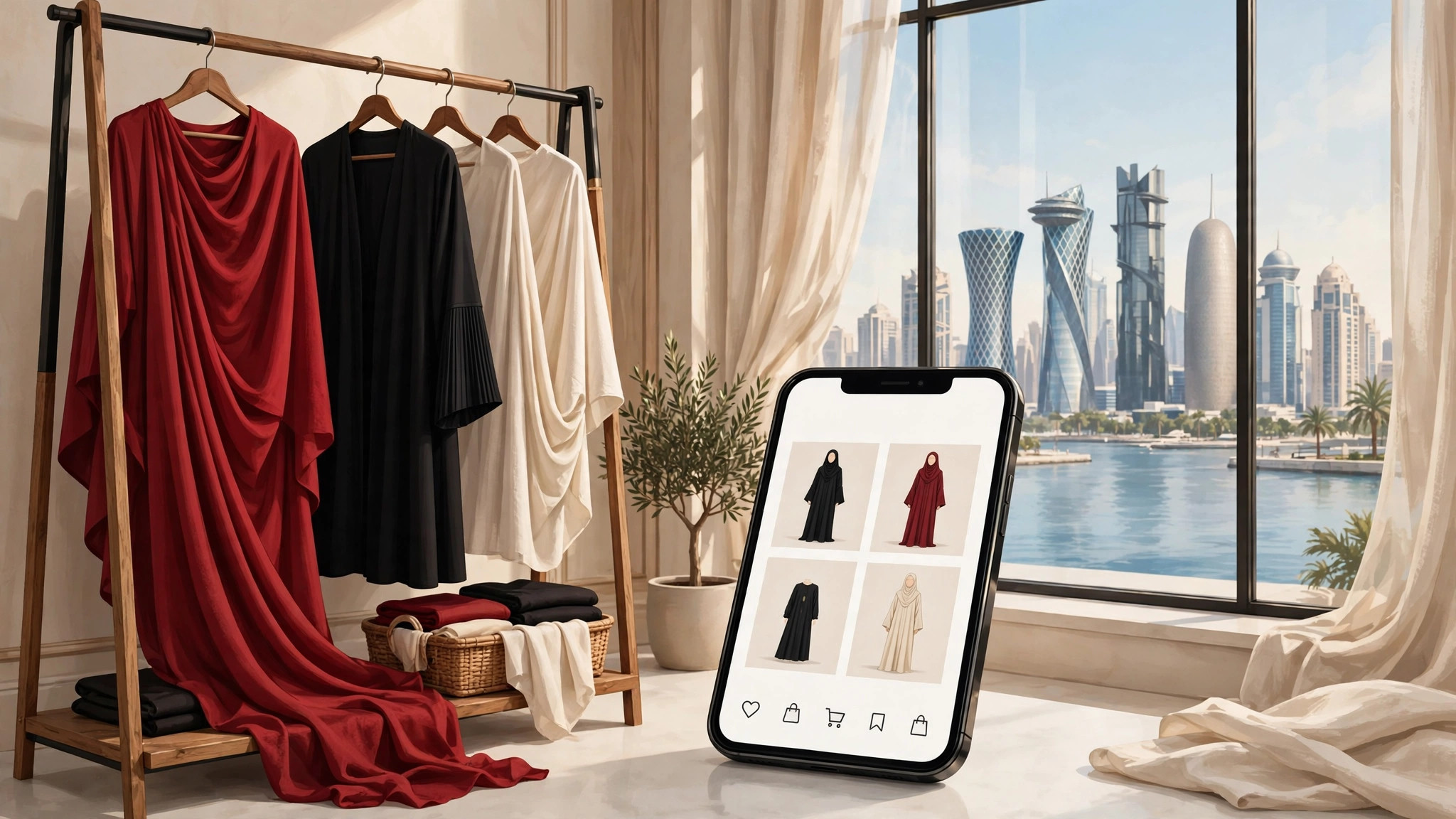
Modest fashion is not a niche in Qatar — it is central: abayas, hijabs, modest dresses, and prayer wear with a large, discerning, loyal customer base. The category's specific requirements: drape and fabric honesty (chiffon vs crepe vs nidha — the fabric names matter, and photography must show true drape and opacity), length and coverage information stated precisely (the abaya buyer needs to know), styling content (how to wear it — the hijab tutorial, the abaya edit — is the category's native content format), and occasion segmentation (daily, work, evening, bridal — distinct needs, distinct price points).
Marketing modest fashion: Qatari modest-fashion creators are among the category's most influential voices — partner genuinely (see our influencer guide); Ramadan/Eid collections are the category's peak season (plan them as the year's main event); and privacy in try-on and marketing imagery matters (see our AR try-on guide for the virtual fitting room). The brands winning Qatari modest fashion combine product excellence with cultural fluency — the ones that feel Qatari, not translated.
CONTENT THAT SELLS FASHION
Fashion content in Qatar: styling videos (the 30-second "three ways to wear it" — native TikTok and Reels format), new-drop content (the collection reveal as an event — countdown, preview, launch), UGC and customer styling (real Qatari customers wearing the pieces — the trust content), and editorial looks (the seasonal lookbook — aspiration that lifts the whole catalogue). Post with the rhythm of fashion: drops and seasons, not random product shots.
The bilingual content reality: Arabic-first for the Qatari customer (product names, descriptions, and styling content in natural Gulf Arabic), English for the expatriate segment — the discipline from our Arabic guide. WhatsApp broadcasts for drop alerts to the opted-in list (the "new collection is live" message — one per drop, not a barrage). And the live-selling format: fashion is the category where live shopping works best in the Gulf — the host styling pieces live, viewers claiming in comments — if your operations can process the order surge.
OPERATIONS: THE UNGLAMOROUS WINNER
Fashion ecommerce operations in Qatar: inventory depth on hero SKUs (the viral abaya that sells out in hours is a marketing failure if you cannot restock), size-curve management (stock the sizes that sell — the data tells you within weeks), payments in the Qatari order (cards, wallets, BNPL for the higher baskets — see our BNPL guide), and delivery with honest Doha timeframes.
Returns are the category's margin battleground: free returns convert, but returns cost — the balance is struck with the fit intelligence above (fewer wrong-size orders) and a returns process so smooth it builds loyalty (the customer who returns easily buys again confidently). Track return reasons religiously: "too small" is a size-guide problem, "not as pictured" is a photography problem, "changed mind" is a targeting problem. Each has a different fix, and the data tells you which.
The pre-order and drop model deserves attention in Qatari fashion: limited collections sold on pre-order (made-to-order abayas, exclusive drops) eliminate inventory risk, manufacture urgency legitimately, and build the community feeling that sustains brands. It demands operational discipline — accurate production timelines communicated honestly, no slipping dates — but the brands that execute it escape the discount cycle entirely. Pair it with the waitlist mechanic: the sold-out piece with a "notify me" capture builds the demand list for the restock and the lookalike audience for the ads. And the Qatar-specific operational edge: same-day delivery within Doha for hero products — the abaya ordered in the morning, worn in the evening — is the service standard that separates leaders from the pack. In fashion's speed-driven segments, fulfilment is marketing: the delivery experience is the last brand impression, and in Qatar's concentrated market, it is the one customers describe to friends.
FASHION ECOMMERCE IN QATAR — FAQs
What is the biggest conversion killer in fashion?
Fit anxiety. Accurate size guides with measurements, model info, fit quizzes, and fit-feedback reviews — plus a free, easy returns policy — address it systematically.
How important is modest fashion?
Central, not niche — abayas, hijabs, and modest wear are core Qatari categories with loyal customers. They demand fabric honesty, precise coverage information, and cultural fluency.
Which platform drives fashion discovery?
Instagram and TikTok — social commerce is the fitting room where Qatari fashion trends start. WhatsApp carries the transaction layer underneath.
Should we offer free returns?
Yes — it is a conversion feature in fashion. Balance the cost with fit intelligence (fewer wrong sizes) and treat return reasons as product data.
How do seasons affect Qatari fashion ecommerce?
Ramadan/Eid collections are the peak (especially modest fashion), National Day edits matter, and the winter social season drives occasion wear. Plan the year as fashion seasons, not generic promotions.


