VISUOSOFTS · OMAN
Ask “how much is a website in Oman?” and you will get answers ranging from suspiciously cheap to suspiciously round — usually with no explanation of what is included. This guide takes a different approach: we will not invent OMR figures, because honest pricing depends on what the site must do. Instead, here is what drives cost, the tiers that actually exist, and how to tell an honest quote from a trap.
The principle is simple: a price without a scope is a guess, and a guess that lowballs wins the contract and blows up later. Understand the drivers and you will never overpay — or underbuy.
WHAT ACTUALLY DRIVES THE PRICE
Functionality, not pages. A five-page brochure site and a five-page site with online booking, payments, and a customer portal are different projects wearing the same page count. Ecommerce, booking systems, multilingual content, integrations (payments, CRM, delivery), and custom features each add real build and testing cost.
Bilingual content doubles content work. Arabic + English means two content sets, RTL layout considerations, and bilingual SEO — see Arabic SEO in Oman. Quotes that ignore this will either deliver machine-translated Arabic or charge you later.
Design originality. Template-based builds are legitimately cheaper and fine for many SMEs; custom design costs more and matters more for brands competing on perception. Ongoing costs — hosting, maintenance, content updates, .om domain renewals — are separate from build cost and should be quoted separately. Any quote that blurs build vs ongoing is hiding something.
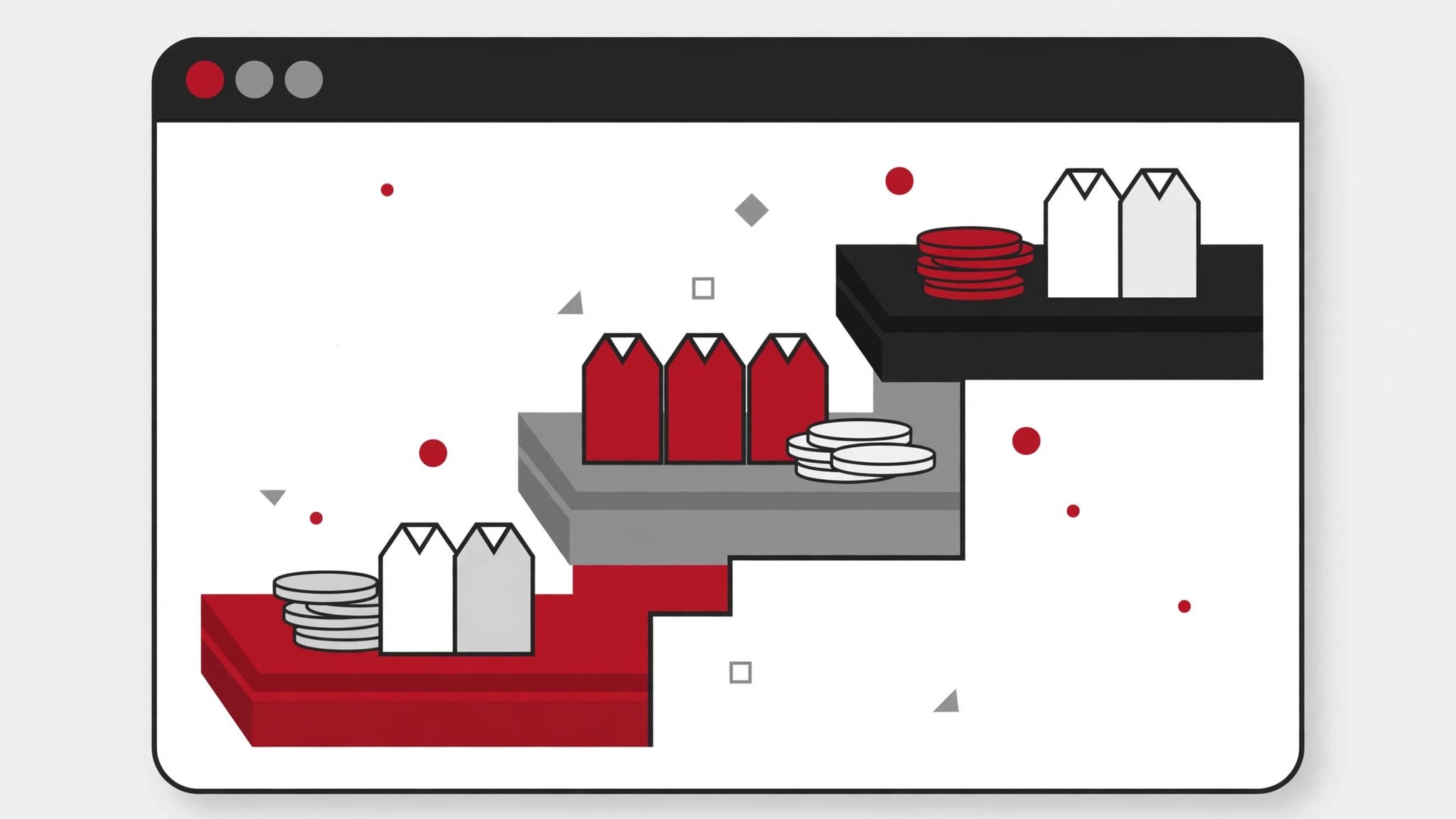
THE HONEST TIERS (DESCRIBED, NOT PRICED)
- Template site, single language: fastest and cheapest; suits new businesses needing credibility online quickly. Limitations: sameness, limited SEO control, scaling pain later.
- Custom-designed brochure/service site, bilingual: the SME sweet spot — original design, Arabic + English, proper SEO foundations, contact/quote flows. Most Omani service businesses land here.
- Ecommerce build: product catalogue, Omani payment methods, Ma'ruf-ready trust elements, shipping logic for Muscat vs interior. Cost scales with catalogue size, integrations, and custom features.
- Custom platform/portal: booking systems, customer portals, B2B ordering, integrations with ERP/CRM — scoped as software, priced as software. If someone quotes this like a brochure site, run.
Where you sit depends on what the site must do. Our website development and small business web design pages describe how we scope each tier.
HOW TO READ A QUOTE (AND SPOT THE TRAPS)
An honest quote lists: scope (pages, features, languages), design approach (template vs custom), content (who writes it — you or them, in which languages), integrations, revisions, timeline, hosting/maintenance terms, and what is excluded. Vague quotes (“professional website, premium design”) are where scope creep and surprise invoices breed.
Red flags: prices far below every other quote (corners will be cut — usually content, SEO, or mobile), no mention of Arabic content quality, “free SEO” bundled without specifics, hosting lock-in with ransom-style renewal pricing, and no staging/demo process before final payment. Ask every bidder the same five questions: What is excluded? Who writes the Arabic? What happens if we need changes in month four? Who owns the domain and code? Show me three live sites you built in the last year.
OMAN-SPECIFIC COST FACTORS
Three local factors move Omani website costs. Bilingual is the default expectation, not an add-on — budget for it from the start. Payment and delivery integration must handle Omani methods and Muscat-vs-interior logistics honestly (last-mile guide). Trust infrastructure — Ma'ruf readiness, review systems, clear policies — is build work, not copy-paste.
Also consider total cost of ownership: a cheap build with expensive mandatory maintenance often costs more over three years than a well-built site with sane upkeep. Ask for three-year TCO, not just build price — and see our platform comparison logic (written for Saudi, same reasoning applies) for the build-vs-platform decision.
DECIDING WHAT YOU ACTUALLY NEED
Before collecting quotes, answer five questions: What must visitors do on the site (call, book, buy, enquire)? In which languages? What systems must it connect to (payments, CRM, delivery, accounting)? Who updates content, and how often? What does success look like in twelve months? The answers place you in a tier — and any agency worth hiring will ask these before quoting.
Start smaller than your ambition if budget is tight: a superb bilingual brochure site with booking/quote flows beats a half-finished ecommerce build. You can add commerce later on solid foundations; you cannot fix a broken foundation cheaply.
REBUILD VS REDESIGN: THE HONEST CALL
Existing site underperforming? Two options: redesign (new look on solid foundations — right when the platform, content structure, and SEO equity are healthy but the design and UX are dated) or rebuild (new foundations — right when the platform is obsolete, the site is unmaintainable, mobile experience is broken, or SEO equity is negligible).
The honest diagnostic: audit technical health (speed, mobile, security), content quality (is the content worth keeping?), SEO equity (rankings and backlinks worth preserving?), and maintenance burden. Redesign when the bones are good; rebuild when they are not — and beware agencies that prescribe rebuilds for redesign problems (or vice versa) based on what they sell. A proper audit before the decision saves the most expensive mistake: rebuilding a site whose real problem was content.
KEY TAKEAWAYS
- Honest pricing is scope-driven: functionality, bilingual content, integrations, and design originality set cost — not page counts.
- Bilingual (Arabic + English) is the default expectation in Oman, not an add-on — budget for native-quality Arabic from the start.
- Demand itemised quotes with explicit exclusions, and ask every bidder the same five questions about content, changes, ownership, and live references.
- Watch the hidden costs: content creation, photography, integrations, training, and year-two maintenance and marketing.
- Decide rebuild vs redesign on evidence: audit technical health, content quality, SEO equity, and maintenance burden before choosing.
WEBSITE COST IN OMAN — FAQs
Why won't this guide give exact OMR prices?
Because honest prices depend on scope — functionality, languages, integrations. Fixed price tables are either bait (then upsold) or fiction. We describe the tiers and drivers so you can judge quotes instead.
What is the cheapest legitimate option for an Omani SME?
A template-based single-language site for basic credibility — but most Omani businesses need bilingual, which moves them up a tier. Cheaper than that usually means cut corners you will pay to fix.
Is bilingual (Arabic + English) really necessary?
For consumer-facing businesses in Oman, effectively yes — you serve both Omani Arabic speakers and the expat/English corporate segment. B2B industrial firms can sometimes lead English-only.
Should I use a platform like Shopify or a custom build?
Platforms suit standard ecommerce quickly and cheaply; custom builds suit unique workflows, portals, and integrations. Decide by what the site must do, not by ideology — and compare three-year total cost, not just build price.
What ongoing costs should I budget?
Hosting, domain renewals (.om), maintenance/security updates, content updates, and marketing (SEO/ads). Get these quoted separately from build cost — blurred quotes hide the real total.
What costs do website quotes usually hide?
Content creation (especially bilingual copy), photography, integrations and their fees, team training, and year-two-plus maintenance and marketing. Demand itemised quotes with exclusions and ask for three-year total cost of ownership.
Rebuild or redesign — how do we decide?
Audit first: technical health (speed, mobile, security), content quality, SEO equity worth preserving, and maintenance burden. Redesign when the bones are good; rebuild when the platform is obsolete or equity is negligible — and beware agencies prescribing based on what they sell.


