VISUOSOFTS · MIDDLE EAST
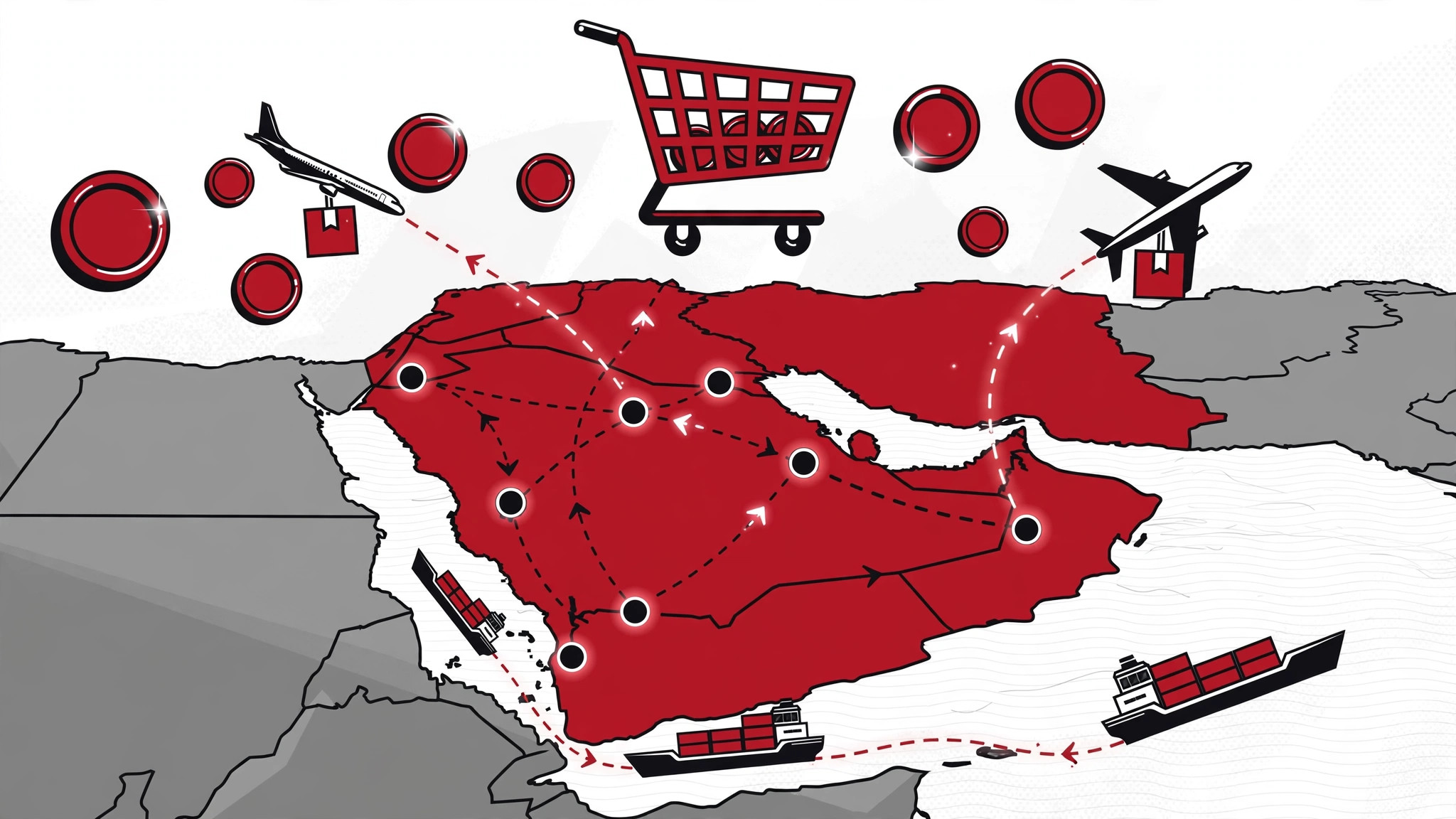
The UAE is the natural launchpad for GCC-wide selling: world-class logistics infrastructure, a central geographic position, deep trade links, and a business environment built for regional distribution. Brands that win the Emirates often find Saudi Arabia, Kuwait, Qatar, Oman and Bahrain as the logical next markets — but each is a distinct market with its own language profile, payment habits, regulations and competitive landscape. Expanding across the GCC is not copy-paste; it is a sequenced market-entry discipline.
This guide covers selling across the GCC from a UAE base: market prioritisation, logistics, payments, language and marketing per market, and the operational sequencing that makes expansion work.
MARKET PRIORITISATION: WHERE NEXT
Do not expand everywhere at once. Prioritise by demand evidence and operational ease:
- Saudi Arabia: the largest prize by far — massive e-commerce market, young population, but distinct regulations (ZATCA e-invoicing, PDPL data protection), Arabic-dominant, and competitive. The highest upside and the highest entry bar.
- Kuwait: wealthy, digitally advanced, WhatsApp-dominated commerce, strong BNPL adoption — and Visuosofts' home market, where we operate from Kuwait City. Often the easiest second market for UAE brands.
- Qatar: affluent, luxury-oriented, with its own e-commerce licensing framework — smaller but high-value. Check current licensing requirements before selling.
- Oman: growing steadily with its own certification and e-invoicing direction — a solid third or fourth market.
- Bahrain: small, accessible, often used as a test market for GCC plays.
Let data choose: where are your cross-border orders already coming from? Where does your Arabic content already get traction? Expand toward proven demand, not toward map aesthetics. One market done well beats three done thinly.
CROSS-BORDER LOGISTICS FROM THE UAE
- Customs and duties reality. GCC cross-border shipments face customs processes, duty structures and de minimis thresholds that vary by country — model landed cost per market honestly, including duties, brokerage and last-mile. "Free GCC shipping" without the maths is a margin trap.
- Delivery promises per market. UAE next-day standards do not transfer — set honest delivery expectations per country and display them pre-purchase. Overpromising cross-border speed is the fastest route to cross-border one-star reviews.
- 3PL and fulfilment partners. Evaluate whether to ship cross-border from the UAE hub or place inventory in-market via local 3PLs — the break-even depends on volume, product value density and return rates. Our logistics guide covers the fulfilment fundamentals.
- Returns across borders. Design the cross-border returns process before launch — it is the hardest operational piece of regional selling. Unclear cross-border returns policies suppress conversion in every market.
- Regulatory compliance per market. Product regulations, labelling requirements, restricted categories and e-commerce rules differ by country — check current regulations for each market before shipping. This is not legal advice; verify with qualified counsel.
PAYMENTS PER MARKET
Payment preferences fragment across the GCC: Saudi Arabia runs on Mada, STC Pay and Tabby; Kuwait on KNET-linked flows, digital wallets and BNPL; Qatar and Oman with their own card and wallet mixes; cash-on-delivery persisting more strongly in some markets than in the UAE. The checkout must localise per market — currency, payment methods ordered by local usage, and instalment options where BNPL is established. Our payment UX principles and BNPL guide transfer directly; the method mix does not. Never assume the UAE checkout works unchanged in Riyadh or Kuwait City.
LANGUAGE PER MARKET
Arabic dominates more strongly outside the UAE's English-first Dubai bubble — Saudi Arabia, Kuwait and Qatar all reward Arabic-first marketing more heavily than Dubai does. But "Arabic" is not one thing: Saudi dialect, Kuwaiti dialect, and Gulf MSA each carry local resonance, and ad copy in the wrong dialect reads as foreign. Our Arabic content guide covers the dialect discipline; apply it per market with native writers from each. English remains relevant for B2B and expatriate segments everywhere — the mix just shifts toward Arabic as you leave Dubai.
MARKETING PER MARKET
- Do not clone the UAE playbook. Channel mixes, creative tones, seasonal calendars and influencer landscapes differ per market. Saudi Arabia's Snapchat dominance, Kuwait's WhatsApp commerce intensity, Qatar's luxury orientation — each demands its own plan. Our two-city guide demonstrates the principle inside one country; apply it across six.
- Localised SEO per market. Country-targeted content, local keyword research, and hreflang discipline for market variants — our SEO services build multi-market architectures properly.
- Paid search per market. Separate campaigns, separate budgets, separate languages — the Arabic PPC and benchmarks disciplines applied per country.
- Marketplace presence per market. Amazon.sa, Noon with country stores, and local platforms — see our marketplace strategy extended per market.
- Seasonal calendars per market. National days differ (Saudi Sep 23, Kuwait Feb 25–26, Qatar Dec 18, Oman Nov 18), Ramadan timing is shared but cultural expression varies — plan each market's calendar natively.
- Local social proof. Reviews, influencers and testimonials from each market — imported UAE social proof converts worse than local proof everywhere.
OPERATIONAL SEQUENCING THAT WORKS
- Phase 1 — validate: enable cross-border shipping to one target market, localise checkout (currency, payments, delivery promise), run a contained marketing test. Measure true landed-cost economics.
- Phase 2 — localise: market-specific content, Arabic dialect creative, local influencer seeding, marketplace presence. Build the demand engine while fulfilment is proven.
- Phase 3 — commit: in-market inventory or 3PL, local customer service capacity, full marketing investment. Commit only on proven unit economics — not on ambition.
- One market at a time. Complete the sequence per market before opening the next. Parallel multi-market launches divide focus and multiply failure modes.
- Keep the UAE engine running. Expansion must not starve the home market — the UAE funds the adventure. Protect core-market investment while expanding.
SELLING ACROSS THE GCC — FAQs
Which GCC market should we enter first after the UAE?
Follow your data: existing cross-border order origins, Arabic content traction, and inbound enquiries. Structurally, Kuwait often offers the smoothest second step for UAE brands, while Saudi Arabia offers the largest prize at the highest entry bar. One market, done well, before the next.
Do we need a local entity in each GCC market?
It depends on the market, your model and scale — marketplace selling, cross-border DTC and local-entity structures each have different requirements. Check current regulations per market with qualified advisers; entity decisions affect payments, logistics and marketing simultaneously, so decide with all three in view.
Can we use the same Arabic content across GCC markets?
MSA content transfers reasonably; dialect-specific creative does not. Product and brand content in MSA can serve regionally, but ad copy, social and conversational touchpoints perform better in local dialect. Budget per-market creative adaptation — it is not optional for performance.
How do customs and duties affect pricing?
They must be modelled into landed cost per market — duties, brokerage, and last-mile — before you set prices or promise free shipping. Display all-in pricing pre-purchase; cross-border surprise fees at delivery generate the angriest customer contacts in e-commerce.
Should we replicate our UAE influencer programme per market?
Replicate the system, not the creators: local creators per market, with local permit and disclosure compliance verified. Imported creators convert worse and may not satisfy local regulatory requirements. See our influencer compliance guide for the framework.
What is the biggest cross-border mistake?
Treating the GCC as one market — one checkout, one creative set, one logistics promise. Six markets, six plans, sequenced by evidence. The brands that respect the differences win them one by one; the brands that do not learn the differences through refunds.


