VISUOSOFTS · OMAN
“Marketing in Oman” usually means marketing in Muscat — which is fine until you spend Salalah money on a Muscat plan, or pitch Sohar procurement officers like Instagram shoppers. Oman's three commercial centres are genuinely different markets: different audiences, different seasonality, different buying logic. Treating them as one burns budget in all three.
This guide breaks down how Muscat, Salalah, and Sohar differ as marketing environments, and how to adapt channels, messaging, and timing for each — whether you operate in one city or all three.
MUSCAT: THE CAPITAL MARKET
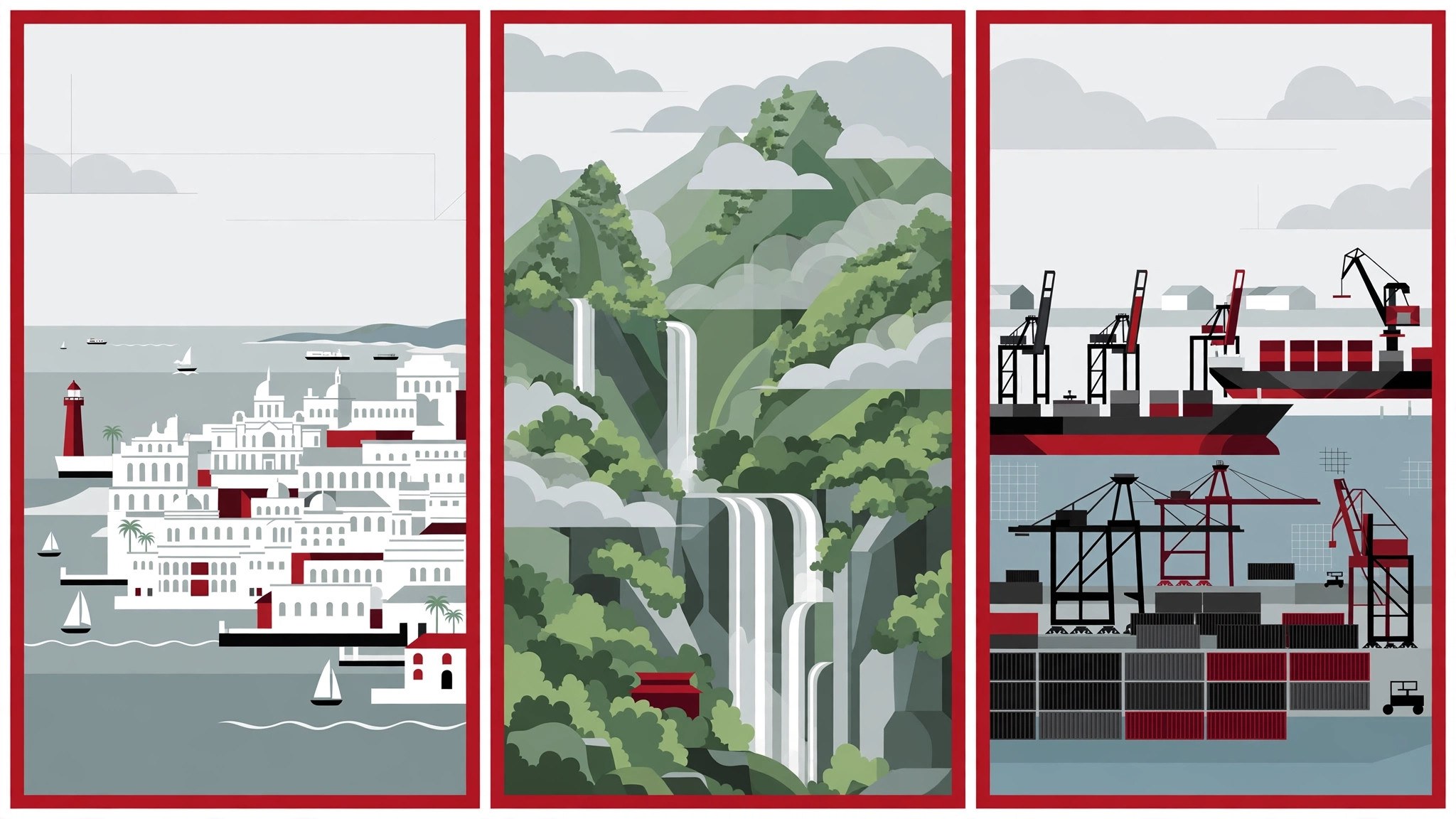
Muscat is Oman's only full-spectrum market: government and corporate HQs, the densest retail and F&B competition, a large expatriate population, and the country's deepest digital adoption. Marketing here is competitive and bilingual — English carries real weight thanks to expats and the corporate sector, while Arabic (MSA with Omani flavour) serves the local consumer base.
What works in Muscat: always-on bilingual SEO and Google Ads (competition is highest here, so account structure matters), Instagram/TikTok for consumer brands, LinkedIn for B2B, and review velocity for restaurants, clinics, and retail — see restaurant marketing in Muscat and clinic and salon marketing. The Muscat customer is the most comparison-driven in Oman: they check Google, Talabat-style apps, and Instagram before committing.
SALALAH: THE SEASONAL MARKET
Salalah runs on the khareef — the summer monsoon season that turns Dhofar green and pulls Gulf tourists in large numbers. For hospitality, tourism, and much of retail, the year has two modes: khareef season (roughly June–September) and everything else. Marketing budgets, staffing, and content calendars must follow that curve.
What works in Salalah: seasonal SEO built months ahead (khareef content must rank before the season, not during it — see SEO for Oman tourism businesses), geo-targeted campaigns aimed at GCC tourists planning trips, influencer and UGC content from the previous season fuelling the next, and aggressive review capture during peak months to carry the off-season. Off-season marketing should target residents and maintenance-mode visibility, not tourist volume that is not there. Our tourism marketing guide covers the khareef playbook in full.
SOHAR: THE INDUSTRIAL B2B MARKET
Sohar — with its port, free zone, and industrial base — is a B2B market. The buyer is a procurement team or plant manager, the sale is considered and specification-driven, and the channels are LinkedIn, industry search, trade relationships, and credibility content. Consumer tactics (influencers, TikTok trends, flash sales) are mostly noise here.
What works in Sohar: technical SEO for specification and capability queries, English-first content (industrial procurement runs in English), case studies and certification evidence, free-zone and logistics content, and account-based outreach to the port and industrial ecosystem. Our B2B industrial marketing guide for Sohar is the deep dive; the key insight is that Sohar buyers evaluate vendors like engineers, not shoppers.
PLANNING ACROSS ALL THREE
If you serve all three cities, resist both extremes: one identical national campaign (wastes Salalah's seasonality and Sohar's B2B logic) and three fully separate operations (triples cost). The workable model is a shared brand and content core with city-level adaptation: one website with city-aware pages and hreflang-style clarity, one content engine, but separate campaign calendars, budgets, and KPIs per city.
Budget split guidance: Muscat takes the always-on base (it is where most revenue concentrates); Salalah takes a seasonal spike (heavy pre-khareef, light off-season); Sohar takes steady B2B investment (LinkedIn, SEO, credibility content — industrial buying does not spike, it compounds). Review the split quarterly; khareef timing and industrial project cycles shift year to year.
THE MISTAKES WE SEE
- Muscat creative in Salalah's off-season. Running tourist-targeted campaigns when the tourists are not there, then concluding “Salalah doesn't convert”.
- Consumer channels for Sohar B2B. TikTok views do not move purchase orders. Match the channel to the buyer.
- One Arabic for all three. MSA works everywhere, but Salalah's Dhofari audience and Sohar's industrial buyers respond to different references and proof points — see dialect vs MSA.
- Ignoring the interior. Nizwa, Sur, Ibri and the interior towns are real markets with distinct logistics costs — our last-mile guide explains why “one Oman” delivery promises fail.
- No seasonal content runway. Khareef content published in June ranks in September — after the season. Publish seasonal SEO six months early.
THE INTERIOR: NIZWA, SUR, IBRI AND BEYOND
Beyond the three cities lies interior Oman — Nizwa (heritage tourism and regional commerce), Sur (maritime heritage, dhow building), Ibri and the Dhahirah (trade and agriculture), and scattered towns with real purchasing power and almost no targeted marketing. The interior is underserved, not unimportant.
Marketing the interior: delivery honesty first — interior customers have been burned by Muscat promises; zoned timelines and transparent pricing win trust (last-mile guide). WhatsApp over apps — interior commerce runs on chat and relationships more than platforms. Local proof — testimonials and references from recognisably local customers outperform generic claims. And Arabic-first always — the interior's English penetration is lower than Muscat's. The brands that serve the interior honestly earn loyalty Muscat competition cannot buy.
SEASONAL BUDGET ALLOCATION MODEL
Turn the three-city insight into a budget model: Muscat: 50–60% base — always-on acquisition, the revenue core. Salalah: 15–25% seasonal — heavy pre-khareef and in-season, minimal off-season (maintenance visibility only). Sohar: 15–20% steady B2B — LinkedIn, SEO, credibility content compounding quarterly. Interior/test: 5–10% — experimental, measured strictly.
Rebalance quarterly against results and season: pre-khareef, shift weight to Salalah; post-season, harvest learnings and shift back. The model's virtue is explicitness — every riyal has a city, a season, and a job. Businesses running “one Oman budget” cannot see which city earns its keep; businesses running this model can — and the reallocation discipline is where the ROI hides.
KEY TAKEAWAYS
- Muscat is the always-on competitive market: bilingual, comparison-driven, and the revenue core deserving 50–60% of budget.
- Salalah is seasonal: market the khareef months ahead, spend heavily pre-season and in-season, and maintain lightly off-season.
- Sohar is industrial B2B: technical SEO, LinkedIn, and credibility content — consumer tactics are noise there.
- Do not forget interior Oman: Nizwa, Sur, and beyond hold real purchasing power with almost no targeted competition.
- Run one brand with city-level execution: shared content core, separate campaign calendars, budgets, and KPIs per city.
REGIONAL MARKETING IN OMAN — FAQs
Is Muscat really that different from the rest of Oman?
Yes — it concentrates government, corporates, expats, and retail competition. Strategies built only on Muscat data misfire in Salalah (seasonal tourism) and Sohar (industrial B2B), where audiences and buying logic differ fundamentally.
When is the khareef season for marketing planning?
Roughly June to September. Marketing for it must start much earlier — seasonal SEO content should be live and ranking months before, and campaign budgets should ramp in spring, not summer.
Can one website serve all three cities?
Yes, with city-aware pages: distinct service/landing content per city reflecting its market logic, clear navigation, and no doorway-page tricks. One strong site with genuine local sections beats three thin sites.
Which city should a new business target first?
Usually Muscat — deepest demand, most data, fastest feedback. Expand to Salalah seasonally or Sohar via B2B channels once the Muscat engine works, rather than splitting a small budget three ways from day one.
Do I need different Arabic for each city?
MSA is safe everywhere. Layer in local references and proof points per city (khareef imagery for Salalah, industrial credibility for Sohar) rather than rewriting everything in dialect — see our dialect vs MSA guide.
Is marketing to interior Oman worth it?
Yes for businesses that can serve it honestly — real purchasing power, almost no targeted competition. The requirements are delivery honesty, WhatsApp-based commerce, local proof, and Arabic-first communication.
What budget split works across the three cities?
A starting model: Muscat 50–60% always-on, Salalah 15–25% seasonal (heavy pre-khareef and in-season), Sohar 15–20% steady B2B, and 5–10% for interior/test markets. Rebalance quarterly against results and season — explicit allocation is where the ROI hides.


