In most businesses, marketing and sales operate as neighbouring countries with a closed border. Marketing runs campaigns and celebrates "leads generated". Sales works "opportunities" and complains the leads are rubbish. Meanwhile, prospects fall into the gap between the two — followed up inconsistently, messaged incoherently, and lost to competitors who joined the dots.
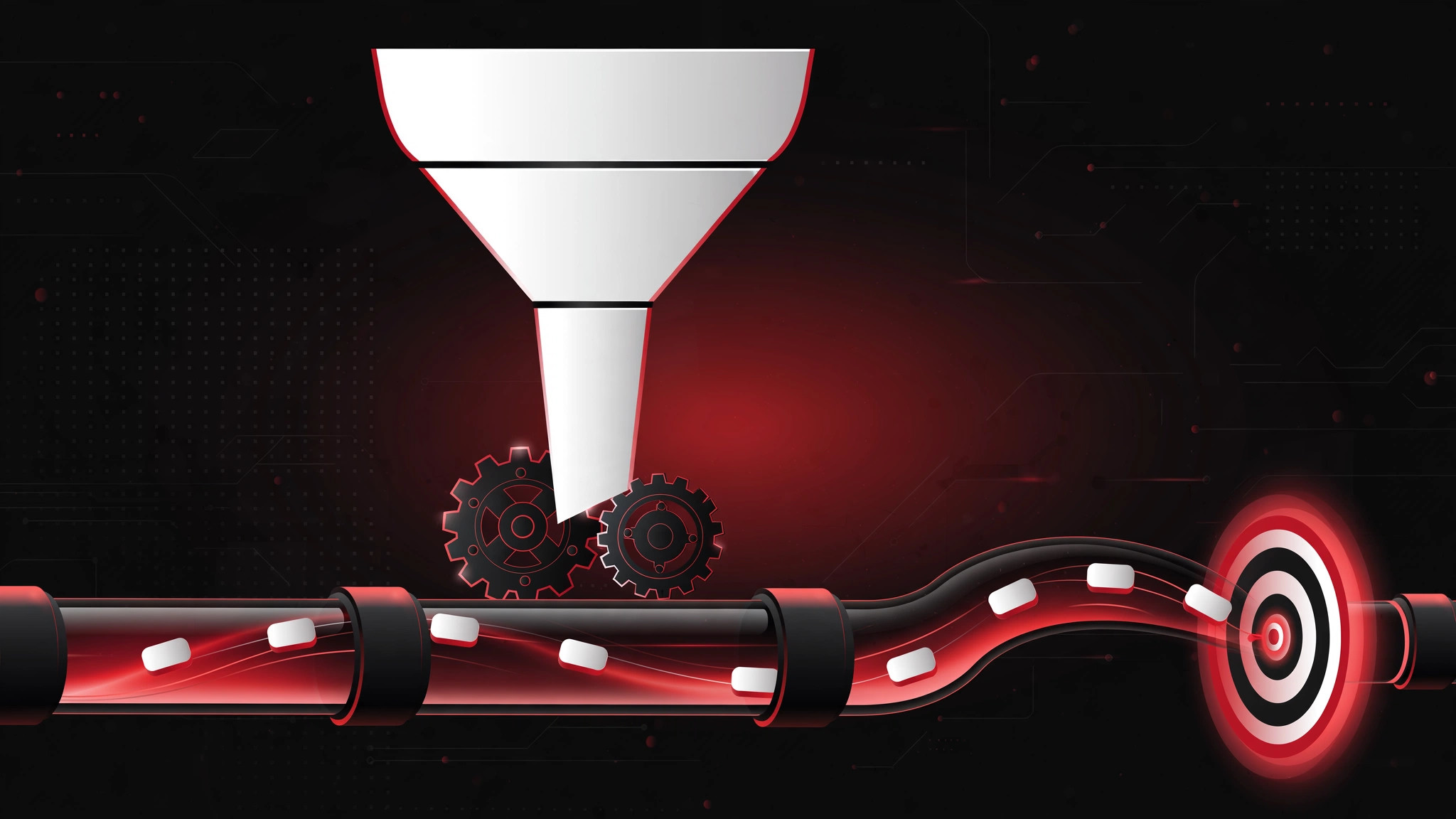
Aligning your sales funnel with your pipeline activity means making marketing's funnel and sales' pipeline two views of one continuous journey, with shared definitions, shared data, and handoffs that actually work. This guide explains why it matters and how to do it.
What "alignment" actually means in practice
The sales funnel describes the buyer's journey from first awareness to purchase — the stages marketing typically manages: visitor, lead, marketing-qualified lead, sales-qualified lead. The pipeline describes the seller's process once engaged: discovery, proposal, negotiation, closed. Alignment means these are not two separate systems with a handoff cliff between them, but one journey with agreed stage definitions, clear ownership at each stage, and data flowing both ways.
In practical terms, an aligned business can answer questions a misaligned one cannot: which marketing campaigns produce customers (not just leads)? How long does a lead take to become revenue? Where exactly do prospects stall? When marketing and sales share one system of record — usually the CRM — these answers are reports, not research projects.
If the CRM concept itself is new to your team, start with our plain-English explainer of how CRM works in a small business before tackling alignment.
Why misalignment costs you money
The costs are concrete. Lead leakage: marketing generates enquiries that sales never follows up properly — or follows up weeks late, when the prospect has moved on. Wasted spend: marketing optimises for lead volume because that is what it is measured on, producing cheap, unqualified contacts while sales starves for real opportunities. Inconsistent messaging: the prospect who downloaded an educational guide gets a hard-sell call referencing a demo they never requested. Blame culture: each side has data proving the other is the problem, and neither has the full picture.
Perhaps most damaging is the invisible cost: nobody owns the middle of the journey. Marketing considers its job done at handoff; sales considers the lead "marketing's" until it becomes an opportunity. Prospects in that middle zone — interested but not yet sales-ready — get the least attention precisely when consistent nurture would convert them. Research consistently shows that the majority of B2B enquiries buy eventually, just not immediately and often not from whoever contacted them first. The businesses that stay engaged through the middle win a disproportionate share.
Step 1: Agree shared definitions
Alignment starts with language. Marketing and sales must agree — in writing — what each stage means. What exactly is a "qualified lead"? Which behaviours or attributes promote a lead from marketing to sales? What makes an opportunity "sales-accepted" versus sent back?
A workable framework defines each stage by observable criteria, not vibes: a marketing-qualified lead might be a target-sector company that downloaded a buying guide and visited pricing; a sales-qualified lead adds confirmed need, authority, and timeline from a discovery conversation. The criteria should be specific enough that both teams classify the same prospect the same way — ambiguity here recreates the border dispute you are trying to abolish.
Also agree the reverse path: under what conditions does sales return a lead to marketing for further nurture, and what happens to it there? Without a defined return path, rejected leads simply die.
Step 2: One system, one pipeline
Definitions on paper mean nothing if marketing works in an email platform and sales in spreadsheets. Both teams need to work in one shared CRM where the full journey is visible: the campaigns that sourced the lead, every touchpoint, the handoff moment, and the sales outcome.
This shared visibility changes behaviour. Marketing sees which campaigns produce closed revenue and reallocates spend accordingly — usually a revelation the first time it happens. Sales sees the content a prospect consumed before the call and walks in informed. Management sees true conversion rates stage by stage and can pinpoint whether the problem is lead quality, follow-up speed, or closing.
Build the handoff into the system, not into good intentions: automatic assignment rules, instant notifications, required fields capturing qualification notes, and SLAs — e.g. sales acknowledges new qualified leads within a defined timeframe. When the process lives in the CRM, it survives busy weeks and staff changes. Businesses whose processes are too idiosyncratic for off-the-shelf tools should consider custom CRM development to encode their exact funnel-to-pipeline flow.
Step 3: Close the feedback loop
The most valuable alignment mechanism is also the simplest: sales tells marketing what actually happened to the leads. Which ones converted and why. Which were a waste of time and what they had in common. What objections came up repeatedly. What content prospects had seen — or wish they had seen — before the call.
Make this systematic, not occasional. A short monthly review where sales shares lead-quality feedback and marketing shares what is coming next prevents drift. Lead scoring models should be recalibrated on actual outcomes: if "downloaded whitepaper" never correlates with closed deals but "visited pricing twice" does, the scoring — and the marketing focus — should reflect that.
Marketing should also equip the middle of the journey: nurture sequences for not-yet-ready leads, case studies matched to common objections, and re-engagement campaigns for stalled opportunities. When sales can see and trigger these from the CRM, the two functions stop being sequential and start being collaborative.
Step 4: Measure the whole journey
Aligned measurement means shared metrics owned jointly. Beyond the usual stage conversion rates, the revealing numbers are: lead-to-customer rate by source (which marketing deserves more budget?), time from first touch to close (where does the journey stall?), pipeline velocity (how fast opportunities move once engaged?), and marketing-influenced revenue (what share of closed business touched marketing at all?).
Agree targets together. When marketing is partly measured on pipeline and revenue — not just lead volume — the incentive to generate vanity leads disappears overnight. And when sales is measured on follow-up speed and thoroughness with marketing-sourced leads, the "rubbish leads" complaint gets tested against data rather than asserted as folklore.
FAQs
What is the difference between a sales funnel and a sales pipeline?
The funnel describes the buyer's journey from awareness to purchase (marketing's traditional territory); the pipeline describes the seller's stages from first engagement to close. They are two views of the same customer journey, and alignment means managing them as one continuous process with shared definitions and data.
How do we stop sales ignoring marketing's leads?
Three things: agree the qualification criteria together so sales trusts what arrives, enforce follow-up SLAs in the CRM so neglect is visible, and give marketing visibility into outcomes so lead quality genuinely improves. "Rubbish leads" is usually a symptom of misaligned definitions or poor nurture, not an unsolvable conflict.
What is a good lead handoff process?
Marketing qualifies against agreed criteria, the CRM auto-assigns the lead to the right salesperson with full context (source, behaviour, qualification notes), the rep is notified instantly, and an SLA governs first contact — ideally within minutes during working hours. Rejected leads return to a defined nurture path rather than disappearing.
Should marketing be measured on revenue?
Partly, yes. Keeping some activity metrics is fine, but tying a meaningful share of marketing's targets to pipeline and revenue aligns incentives with the business. It ends the era of celebrating lead volume while sales starves, and it gives marketing proper credit for the revenue it genuinely influences.
Do we need new software to align funnel and pipeline?
Usually not new software — just one shared system used properly. If marketing and sales already have a CRM, the work is configuration and process: shared stages, assignment rules, SLAs, and reporting. Only if your process cannot be represented in packaged tools does custom development enter the picture.
Contact us if your marketing and sales are working from different playbooks — we will help you join them into one revenue process.


