VISUOSOFTS · SAUDI ARABIA
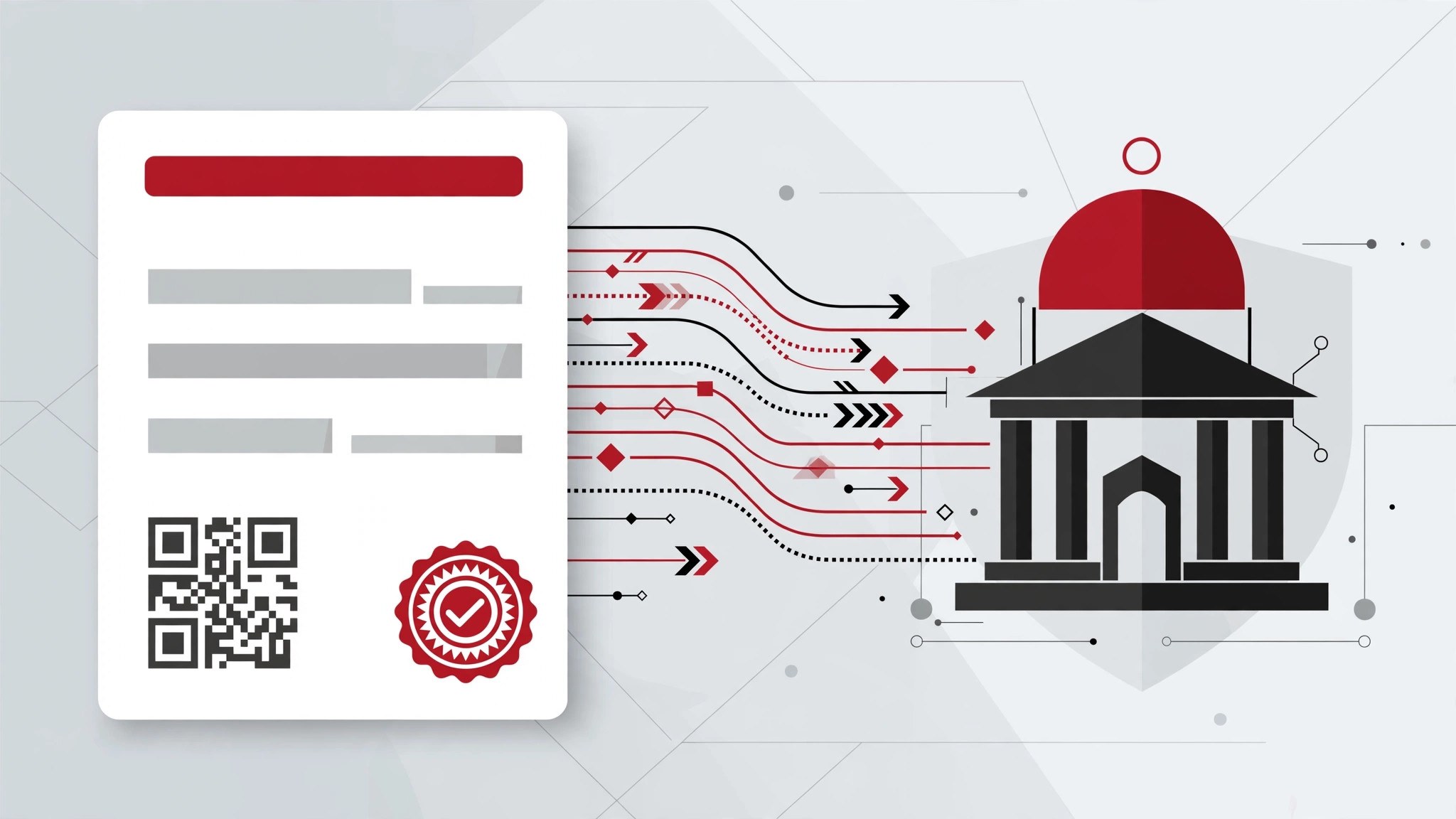
Saudi Arabia's e-invoicing mandate — Fatoora, run by ZATCA — moved from concept to enforcement in phases: phase 1 (generation) required compliant e-invoices; phase 2 (integration) requires connecting invoicing systems to ZATCA's platform for clearance and reporting. For SMEs, phase 2 is where the real systems work lives.
This guide explains what phase 2 requires in practical terms, the preparation sequence, and the pitfalls Saudi businesses hit. As ever with tax regulation: check current ZATCA announcements and take professional advice — phases, thresholds, and technical specs evolve, and this guide maps the work, not the legal position.
WHAT PHASE 2 ACTUALLY REQUIRES
In practical terms: your invoicing system must generate ZATCA-compliant e-invoices (structured data, required fields, sequential numbering, tamper-evident formats) and integrate with ZATCA's systems for the clearance/reporting flows phase 2 mandates. Manual PDFs and spreadsheet invoicing do not survive this — the requirement is systemic, not cosmetic.
Rollout has been phased by business size/revenue thresholds, with waves announced by ZATCA — confirm which wave applies to you from official sources, not from vendor marketing. The pattern from phase 1 holds: announced timelines feel generous until integration complexity meets them, and late movers face booked-out integrators and rush pricing.
THE SME PREPARATION SEQUENCE
- Data cleanup first. Customer masters (legal names, VAT numbers), product catalogues (codes, tax treatments), historical invoice reconciliation. Bad data breaks integrations — see the same discipline in our Oman e-invoicing preparation guide.
- System selection. Compliant invoicing/ERP with ZATCA integration capability and local support — favour proven integrations over promises. Your ecommerce platform (Salla/Zid/Shopify — see the comparison) must feed the same invoice stream.
- Integration and testing. Connect invoicing ↔ accounting ↔ ZATCA flows; test clearance/reporting end-to-end including credit notes, corrections, and edge cases.
- People and process. Document who raises/approves/corrects invoices; train the staff who touch the workflow — exceptions break compliance more often than software does.
- Go-live buffer. Run parallel before your wave deadline; the businesses that cut over on deadline day are the ones that discover breaks publicly.
PITFALLS SAUDI BUSINESSES HIT
- Multiple invoicing streams. POS, ecommerce, and manual invoices running in parallel cannot integrate coherently — consolidate first.
- Vendor promises vs ZATCA reality. “Fatoora-ready” marketing is not the same as tested integration; demand reference deployments in your sector.
- Ignoring B2C scope. Simplified invoices for consumers have their own requirements — retail SMEs get caught here.
- No correction workflow. Credit notes and invoice corrections must flow through the compliant process, not around it.
- Deadline optimism. Integration projects slip; start early enough that slippage does not become non-compliance.
BEYOND COMPLIANCE: THE UPSIDE
Businesses that do phase 2 properly get more than compliance: real-time invoice visibility, cleaner receivables, automated reconciliation, and data that feeds forecasting. The integration work — connecting sales, invoicing, and accounting — is digitalisation with a deadline, and it pays operational dividends long after the mandate.
Treat the project as systems modernisation that happens to satisfy ZATCA, not as a tax chore. The SMEs that took this view in phase 1 report the preparation cost a fraction of the ongoing operational savings — and they are structurally ready for whatever phase 3 brings.
WHAT TO DO THIS QUARTER
Confirm your wave and deadline from ZATCA sources. Audit data and invoicing streams now. Shortlist integration-capable systems with local references. Assign an owner — compliance projects without owners drift. And if you sell online, make ecommerce-invoice integration part of the same project, not a sequel.
The cost of early preparation is planning time; the cost of late compliance is rush fees, operational disruption, and penalty exposure. The math favours starting now — which is also what every business that went through phase 1 wishes it had done.
FATOORA FOR RETAIL AND ECOMMERCE
Retail and ecommerce SMEs face Fatoora's B2C dimension: simplified e-invoices for consumer transactions with their own field and format requirements, POS integration (in-store systems must generate compliant invoices — not just the back-office ERP), and ecommerce platform flows (Salla, Zid, Shopify orders must feed the compliant invoice stream — see the platform comparison).
The retail-specific pitfalls: returns and refunds flowing through compliant credit-note processes (not informal reversals), promotional mechanics (discounts, bundles, loyalty redemptions) reflected correctly in invoice data, and high transaction volumes demanding genuinely automated — not semi-manual — invoice generation. Test at volume before your wave deadline: systems that work for ten invoices a day often break at a thousand.
FROM COMPLIANCE TO INTELLIGENCE
Phase 2's structured invoice data is a business-intelligence asset most SMEs ignore: real-time revenue visibility (sales by product, customer, and period — no month-end scramble), receivables discipline (invoice-to-cash tracking that exposes slow payers systematically), customer analytics (purchase patterns, concentration risk, churn signals — from data you already generate), and forecasting foundations (clean historical series feeding demand planning).
Capture the upside deliberately: connect invoicing data to dashboards (not just the tax portal), review it in management rhythm, and train finance teams to analyse rather than merely file. The SMEs that treat Fatoora as a data project that happens to satisfy ZATCA — rather than a tax chore — report the preparation paying for itself in operational insight within the first year.
KEY TAKEAWAYS
- Phase 2 is the systems challenge: compliant e-invoice generation plus integration with ZATCA's clearance/reporting flows — spreadsheets do not survive it.
- Confirm your wave and deadline from official ZATCA sources — not vendor marketing — and start early enough that slippage does not become non-compliance.
- Prepare in sequence: data cleanup, system selection on integration reality, end-to-end testing including corrections, people and process, then a go-live buffer.
- Retail and ecommerce face the B2C dimension: simplified invoices, POS integration, platform feed integrity, and volume-tested automation.
- Treat it as modernisation with a deadline: the integration work pays operational dividends — and its data becomes a business-intelligence asset.
ZATCA FATOORA PHASE 2 — FAQs
What is the difference between Fatoora phase 1 and phase 2?
Phase 1 required generating compliant e-invoices; phase 2 requires integrating invoicing systems with ZATCA's platform for clearance/reporting. Phase 2 is the systems-integration challenge.
How do I know which wave applies to my business?
ZATCA announces waves by criteria such as revenue thresholds — confirm from official ZATCA announcements for your business, not from vendor marketing or dated guides.
Can I keep invoicing from spreadsheets?
No — phase 2 requires systemic integration with compliant generation and ZATCA connectivity. Manual/spreadsheet invoicing cannot meet the requirements.
Does Fatoora apply to B2C retail sales?
Simplified e-invoices cover B2C transactions with their own requirements — retail SMEs must address this, not just B2B invoicing. Check current scope rules.
What is the most common SME failure in phase 2?
Starting integration too late and discovering data/system problems against a fixed deadline — plus running multiple unconsolidated invoicing streams that cannot integrate coherently.
Does Fatoora apply to B2C retail transactions?
Yes — simplified e-invoices cover consumer sales with their own requirements. Retail SMEs must integrate POS and ecommerce platforms into compliant invoice flows, handle returns via proper credit notes, and test at real transaction volumes.
How can Fatoora data help beyond compliance?
Phase 2's structured invoice data enables real-time revenue visibility, receivables discipline, customer analytics (patterns, concentration, churn signals), and forecasting foundations. Connect it to dashboards and management rhythm — SMEs treating Fatoora as a data project report it paying for itself within a year.


