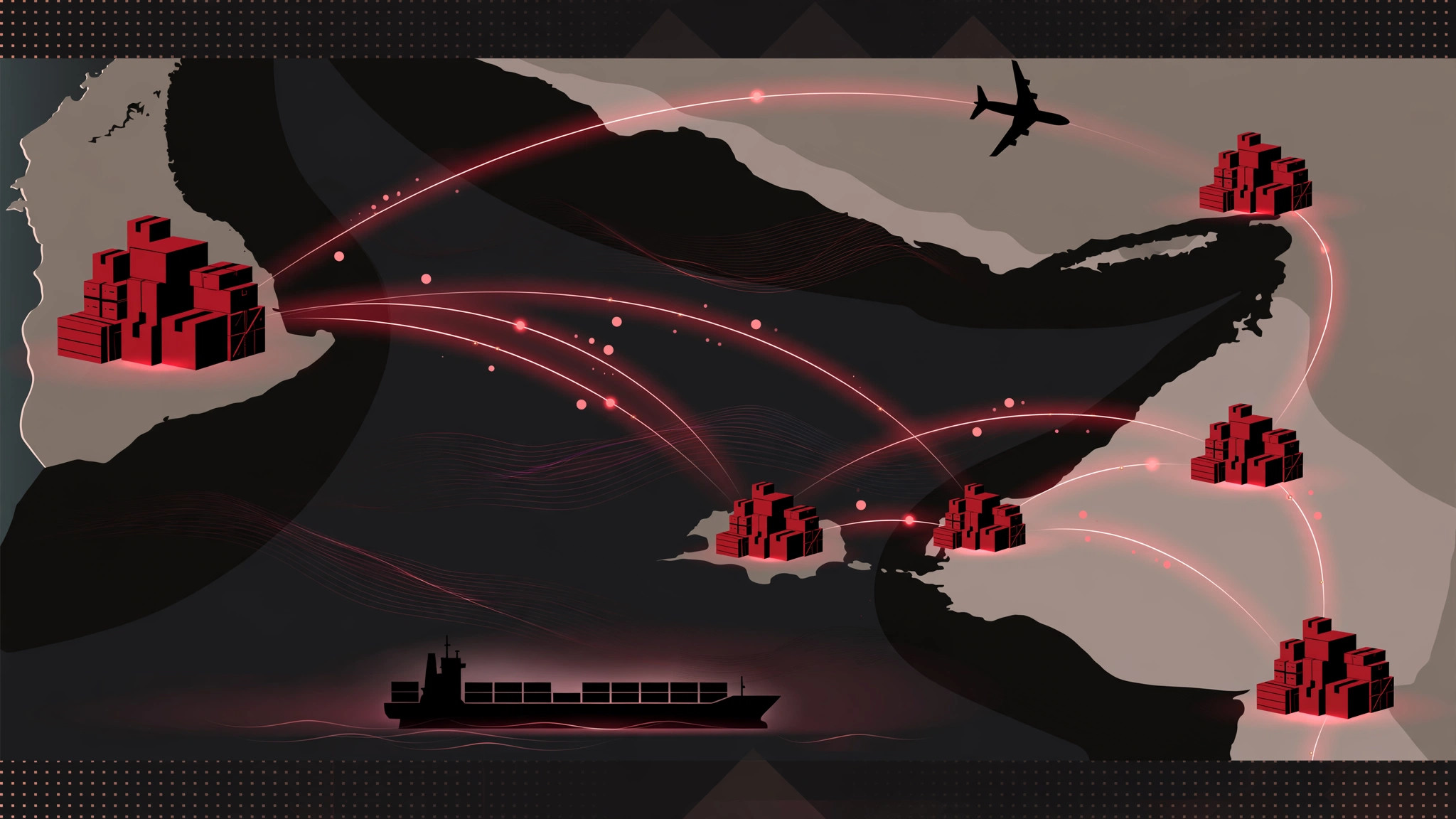
VISUOSOFTS · E-COMMERCE
Kuwait is a superb base for Gulf-wide ecommerce: central geography, a mature logistics sector, high domestic ecommerce penetration, and products (fashion, beauty, specialty foods, gold-adjacent goods) with regional demand. Selling from Kuwait to Saudi Arabia, the UAE, Qatar, Bahrain, and Oman turns a national store into a regional business — but cross-border selling has real friction: shipping, customs, payments, returns, and marketing localisation. This playbook covers all of it.
We build cross-border ecommerce for Gulf merchants — get a free consultation on your expansion.
WHICH MARKETS, IN WHICH ORDER
Expand in order of friction, not size. Saudi Arabia is the prize (by far the largest Gulf ecommerce market) and the highest friction: bigger, more competitive, distinct consumer culture, and its own regulatory and logistics realities. The UAE is the easiest operationally (mature logistics, familiar platforms) but the most competitive. Qatar, Bahrain, and Oman are the sensible first expansions: smaller, closer culturally and logistically, and winnable with focused effort.
The recommended sequence for most Kuwaiti merchants: prove the cross-border operation on Bahrain and Qatar (low friction, fast learning), then Oman, then commit properly to Saudi or the UAE — one at a time, with dedicated marketing. The mistake is launching "GCC shipping" as a checkbox: a Saudi customer who gets Kuwaiti-dialect creative, KWD pricing, and vague delivery promises does not feel served — they feel like an afterthought. Each market deserves its own storefront experience, even if the warehouse is shared. Our Qatar cross-border guide details the specifics of selling into Qatar.
LOGISTICS AND CUSTOMS: THE MAKE-OR-BREAK LAYER
Cross-border ecommerce lives or dies on delivery promises kept. The fundamentals: a logistics partner with real GCC cross-border capability (not a domestic courier with ambitions) — compare transit times, tracking quality, COD handling (still relevant in some markets), and returns processing per destination. Duties and customs: GCC customs union membership simplifies intra-GCC movement, but product categories, documentation, and de minimis thresholds vary — get the paperwork right per market (our Qatar guide covers the QR1,000 de minimis specifically).
The customer-facing rules: show landed costs at checkout (duties and fees included — surprise charges at delivery destroy trust and generate refused shipments), state delivery timeframes per country honestly (and build buffer — cross-border always has variance), and design a returns process that works across borders (the absence of one is the top reason Gulf shoppers hesitate on cross-border purchases). Consider the fulfilment evolution: start shipping from Kuwait, and as a market proves itself, evaluate local fulfilment (3PL in-market) — the delivery-speed and returns improvement usually justifies it once volume crosses the threshold.
PAYMENTS: EACH MARKET HAS ITS OWN STACK
Kuwait's KNET-plus-wallets checkout does not travel. Saudi Arabia needs Mada front and centre, plus Tabby (dominant there) and STC Pay. The UAE needs its own wallet and card mix with Tabby prominent. Qatar has its own evolving stack (see our Qatar payments guide). The principle: each market's checkout must feel local — the payment methods in the right order, the currency correct (SAR, AED, QAR — never KWD shown to a Saudi customer), and Arabic copy in the local register.
BNPL travels well as a concept but the providers and terms are market-specific — see our Kuwait BNPL guide and Qatar BNPL guide for the market-by-market picture. And COD: fading everywhere but at different speeds — keep it where the target market still expects it (with the usual surcharge/minimum discipline), drop it where digital has won. The checkout is the last impression; make it feel like a local store, not an export operation.
STORE ARCHITECTURE FOR MULTI-MARKET SELLING
The technical setup: one platform, market-specific experiences. Subfolders per market (yourstore.com/sa/, /ae/, /qa/) with hreflang between them is the clean, scalable pattern — it concentrates domain authority while allowing per-market content, currency, and pricing. Each market version needs: local currency and pricing (not converted KWD — priced for the market), local payment methods in local order, local delivery terms and timeframes, and localised content (not just translated — see marketing below).
Inventory and pricing discipline: decide whether pricing is harmonised or market-specific (market-specific usually wins — purchasing power and competition differ), manage stock allocation so one market's surge does not stock-out another's bestsellers, and keep the product information architecture consistent so operations stay sane. The e-invoicing and tax compliance per market needs professional advice — cross-border tax is the area where DIY optimism is most expensive. Build the architecture once, properly; retrofitting multi-market onto a single-market store is where projects go to die.
LOCALISED MARKETING: NOT TRANSLATED, REBUILT
Each Gulf market needs its own marketing, not Kuwait's marketing translated. The differences are concrete: dialect (Saudi Najdi vs Kuwaiti vs Emirati phrasing — our dialect guide covers the Kuwaiti side; each market needs its own), platform mix (Snapchat's weight varies by market, TikTok's audience differs), influencer rosters (local creators per market — a Kuwaiti influencer does not sell in Jeddah), paid search in the local language patterns (see our Kuwait PPC guide and Arabic PPC guide), and seasonal calendars (National Days differ: Saudi Sep 23, UAE Dec 2–3, Qatar Dec 18, Kuwait Feb 25–26 — each a campaign moment).
The operating model: a central brand and creative system with per-market execution — local community managers or agencies per market, local influencer relationships, local customer service (a Saudi customer messaging in Saudi dialect should not get a Kuwaiti-dialect bot reply). Start with one market's marketing done properly rather than five markets' marketing done thinly. The expansion that works is sequential and deep; the expansion that fails is simultaneous and shallow.
SELLING FROM KUWAIT TO THE GCC — FAQs
Which GCC market should we enter first?
Usually Bahrain or Qatar — lowest friction, fastest learning. Then Oman, then a committed push into Saudi Arabia or the UAE one at a time. Expand in order of friction, not size.
How do we handle customs and duties?
With a capable cross-border logistics partner and landed-cost pricing at checkout (duties included, no surprises). Get professional advice on documentation per market — assumptions here are expensive.
Should each market have its own website?
Market-specific experiences on one platform (subfolders with hreflang) beat separate sites — shared authority, sane operations, localised content per market. Separate domains per market are rarely justified.
Can we use the same marketing across the Gulf?
No — dialect, platforms, influencers, seasons, and payment expectations all differ per market. Central brand system, per-market execution. Translated Kuwaiti marketing is not localised marketing.
When does local fulfilment make sense?
When a market's volume justifies it — the delivery-speed and returns improvement usually pays back quickly. Start shipping from Kuwait, move to in-market 3PL as each market proves itself.


