Every business wants more leads. Far fewer businesses have a proper system for handling the leads they already get. The result is depressingly common: marketing generates enquiries, some get a quick call, some sit in an inbox, some get a quote and are never followed up, and nobody can say what the conversion rate is because nobody tracked the journey. Lead management software exists to fix exactly this — the unglamorous middle ground between "we got an enquiry" and "we won the customer".
This buyer's guide covers what lead management software does, the stages from capture to sales handover, how lead scoring works in practice, why speed-to-lead matters so much, and what UK businesses should look for when choosing a system.
What lead management software actually does
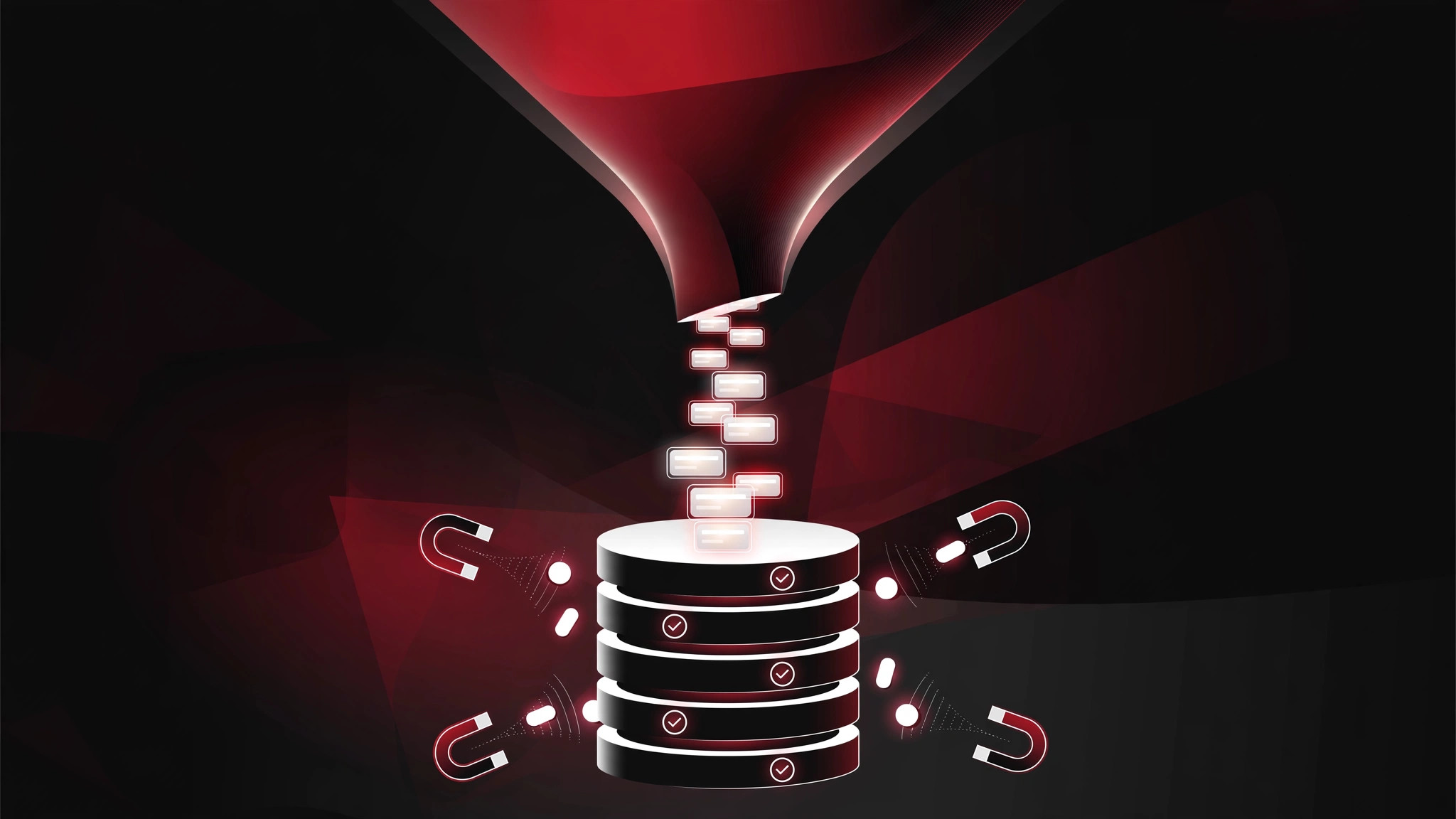
At its core, lead management software tracks every prospective customer from first touch to the point they become a sales opportunity (or are disqualified), making sure nothing falls through the cracks. The stages:
- Capture: collecting enquiries from every source — website forms, phone calls, email, live chat, social media, events, referrals — into one place, automatically.
- Enrichment and validation: checking the lead is real, complete and correctly categorised. A surprising amount of "lead volume" turns out to be spam, duplicates or existing customers using the wrong form.
- Distribution: routing each lead to the right salesperson or team, fast, by rules you define.
- Nurture: structured follow-up for leads that are interested but not ready — staying in touch without stalking.
- Qualification: determining which leads are worth sales effort, ideally before a salesperson spends an hour on the phone.
- Handover: the clean transfer from marketing (or whoever captured the lead) to sales, with full context.
- Tracking and reporting: conversion rates by source, stage and salesperson — the feedback loop that improves everything else.
Some businesses buy standalone lead management tools; most get these capabilities as part of a CRM. The distinction matters less than the coverage: whatever you use should handle all seven stages, because a gap at any stage leaks revenue.
Speed-to-lead: the number that matters most
If you take one thing from this guide, take this: the speed of your first response is the single biggest controllable factor in lead conversion. Study after study, across industries, finds the same pattern — leads contacted within minutes convert at dramatically higher rates than leads contacted within hours, and leads contacted the next day convert poorly. The decay curve is brutal.
This is not about working harder; it is about plumbing. The businesses that respond in minutes have automated the immediate acknowledgement and the instant internal alert, so the salesperson's phone buzzes while the prospect is still on the website. The businesses that respond in hours are relying on someone checking an inbox. Our guide to AI lead follow-up for UK service businesses digs into the mechanics; the principle applies whatever technology you use.
When evaluating software, ask specifically: how does an enquiry get from the website form to a salesperson's phone, what is the median time, and what happens if the assigned salesperson does not respond within the target window? Escalation on non-response is the feature that separates serious lead management from a shared inbox with a nicer interface.
Lead scoring: separating signal from noise
Not all leads deserve equal effort. Lead scoring is the systematic way of deciding which ones get immediate attention. There are two halves:
Explicit scoring uses what the lead tells you: company size, sector, budget, timeline, the product they enquired about. A facilities manager at a 500-person company asking about a £50k contract outscores a student asking for a brochure. Define the criteria with your sales team — they know what a good lead looks like — and keep the model simple enough to explain. A scoring model nobody understands is a scoring model nobody trusts.
Implicit (behavioural) scoring uses what the lead does: pages visited, content downloaded, emails opened, pricing page views, repeat visits. Someone who has visited your pricing page three times this week is signalling intent regardless of what the form said.
Practical advice: start simple. Five to eight scoring criteria, clearly weighted, reviewed quarterly against actual outcomes. The sophisticated models can come later; most businesses have never scored leads at all, and a basic model consistently applied beats a clever model that nobody maintains. And always include negative scoring — disqualify fast. A salesperson's time spent chasing leads that were never real is the hidden cost of poor qualification.
The marketing-to-sales handover
The handover is where lead management most often breaks. Marketing says the leads are good; sales says they are rubbish; both are partly right because nobody defined what "good" means. The fix is a service-level agreement between marketing and sales, and the software should enforce it:
- Agreed definitions: what counts as a marketing-qualified lead (MQL) versus a sales-qualified lead (SQL)? Write the criteria down. "Marketing-qualified" cannot mean "filled in a form".
- Response SLAs: sales commits to contacting MQLs within an agreed time (an hour for hot, a day for warm). The system tracks compliance automatically.
- Feedback loop: sales marks leads as accepted or rejected with a reason. Rejected-with-reason data is gold — it tells marketing what to stop sending and what to send more of.
- Recycling, not binning: leads that are real but not ready go into nurture, not the bin. "Not now" is not "never".
Software cannot fix a broken marketing-sales relationship, but it can make the dysfunction visible — which is usually the first step to fixing it. When both sides can see the same numbers (leads delivered, response times, acceptance rates, conversion), the argument moves from opinions to data.
What to look for: a buyer's checklist
- Multi-channel capture: web forms, phone (with call logging), email, chat, social — all feeding one record automatically. If capture is manual, it will not happen consistently.
- Instant routing and escalation: rule-based assignment in minutes, with automatic escalation when leads are not worked. Ask for the median routing time, not the best case.
- Lead scoring: configurable explicit and behavioural scoring, simple enough for the sales team to understand and trust.
- Nurture capability: behaviour-triggered follow-up sequences for not-yet-ready leads, with clear exits when they engage.
- Full activity timeline: every touch — calls, emails, meetings, website visits — on one chronological record. Anyone picking up the lead should see the whole story in 30 seconds.
- Source attribution: which channels and campaigns produce leads that actually convert (not just leads). This is what justifies marketing spend.
- Reporting: conversion by source, stage and salesperson; speed-to-lead trends; pipeline contribution. If you cannot measure it, you cannot improve it.
- Integration: with your website, phone system, email marketing and accounting/ERP. Lead management that stands alone becomes another silo.
- Mobile: salespeople work on phones. Full lead context and one-tap call/email logging on mobile is non-negotiable.
Standalone tool vs. CRM module
For most businesses, lead management as part of a CRM is the right answer — the lead becomes the opportunity becomes the customer in one system, with one history. Standalone lead management tools make sense in specific cases: very high lead volumes with a dedicated qualification team (where the handoff to sales is a formal process), or complex multi-brand operations. But beware the integration tax: every additional system is another integration to build, another login, another place where data goes stale.
For businesses whose lead process is genuinely distinctive — unusual qualification logic, regulated advice processes, complex multi-stakeholder B2B sales — a custom-built CRM with lead management designed around the actual sales process can outperform a configured platform. The test is always the same: does the software fit how you sell, or are you bending how you sell to fit the software?
Getting started
If you currently manage leads in inboxes and spreadsheets, do not try to implement everything at once. The sequence that works:
- Get every lead into one system automatically (capture).
- Route instantly with escalation (distribution).
- Measure speed-to-lead and conversion by source (visibility).
- Add scoring once you have data to score against.
- Build nurture for the not-yet-ready.
- Formalise the marketing-sales SLA with the data you now have.
Each step pays for the next. By step three you will know things about your business that change how you spend your marketing budget — which is usually where the ROI conversation ends and the implementation conversation begins.
If you want help designing a lead management process that fits how your business actually sells — or a system built around it — get in touch. We will start with your sales process, not our software preferences.
FAQs
What is lead management software?
Software that tracks prospective customers from first enquiry through qualification to sales handover: capturing leads from all channels, routing them to the right salesperson, scoring and nurturing them, and reporting on conversion. Most businesses get this as part of a CRM rather than as a standalone tool.
How quickly should you respond to a new lead?
As fast as possible — ideally within minutes. Conversion rates decay sharply with response time; leads contacted within minutes convert at dramatically higher rates than those contacted hours later. Automate the acknowledgement and instant routing so speed does not depend on someone checking an inbox.
What is lead scoring?
A systematic way of ranking leads by their likelihood to buy, combining explicit criteria (company size, budget, need — what they tell you) with behavioural signals (pricing page visits, content downloads — what they do). Start with 5–8 simple criteria, review quarterly against actual outcomes, and include negative scoring to disqualify fast.
Should lead management be part of our CRM?
Usually yes — one system from lead to customer keeps the full history in one place and avoids integration overhead. Standalone tools suit high-volume operations with dedicated qualification teams. Either way, all seven stages (capture through reporting) need coverage.
How do you fix the marketing vs. sales lead quality argument?
With agreed definitions (what counts as qualified), response SLAs, a feedback loop where sales accepts or rejects leads with reasons, and shared reporting both sides can see. Software makes the numbers visible; the agreement itself is a commercial decision, not a technical one.


