VISUOSOFTS · WEB DEVELOPMENT
Most follow-ups fail for the same reason: they ask without giving, remind without adding value, and sound like every other "just bumping this" email. Writing a response-worthy follow-up email means the sequence that earns replies — with 15 templates you can adapt today.
Written for UK sellers and professionals: the follow-up system that gets answers.
WHY FOLLOW-UPS FAIL — THE AUTOPSY
They fail because: the valueless (the "just checking in" — the nothing offered, the nothing earned), the repetitive (the same ask, repeated — the ignored), the self-centred (the "I wanted to follow up" — the about-me, not the about-them), and the mistimed (the too-soon pestering, the too-late forgotten — the rhythm wrong).
The deeper failure: the follow-up treated as the nagging afterthought rather than the designed sequence. The response-worthy follow-up is planned from the first touch — each email in the sequence has its job, its value, its angle. The autopsy of the failed follow-up almost always reveals the absence of design. For the apology craft when follow-ups go wrong, see apology emails.
THE PRINCIPLES — WHAT EARNS REPLIES
The principles: the value in every touch (the insight, the resource, the introduction — the earned attention), the brevity (the 100 words — the respected), the new angle (each follow-up different — the fresh reason to reply), and the easy reply (the specific question, the low-friction ask — the answered).
The psychology: the follow-up works when the recipient feels helped, not hunted — the value-giving posture throughout. The sequence should feel like the helpful persistence of someone who genuinely believes the conversation is worth having, not the desperate flailing of someone who needs the deal. The posture is felt in every line; the recipient's reply decision is made on the feeling as much as the content.
THE SEQUENCE — THE DESIGNED CADENCE
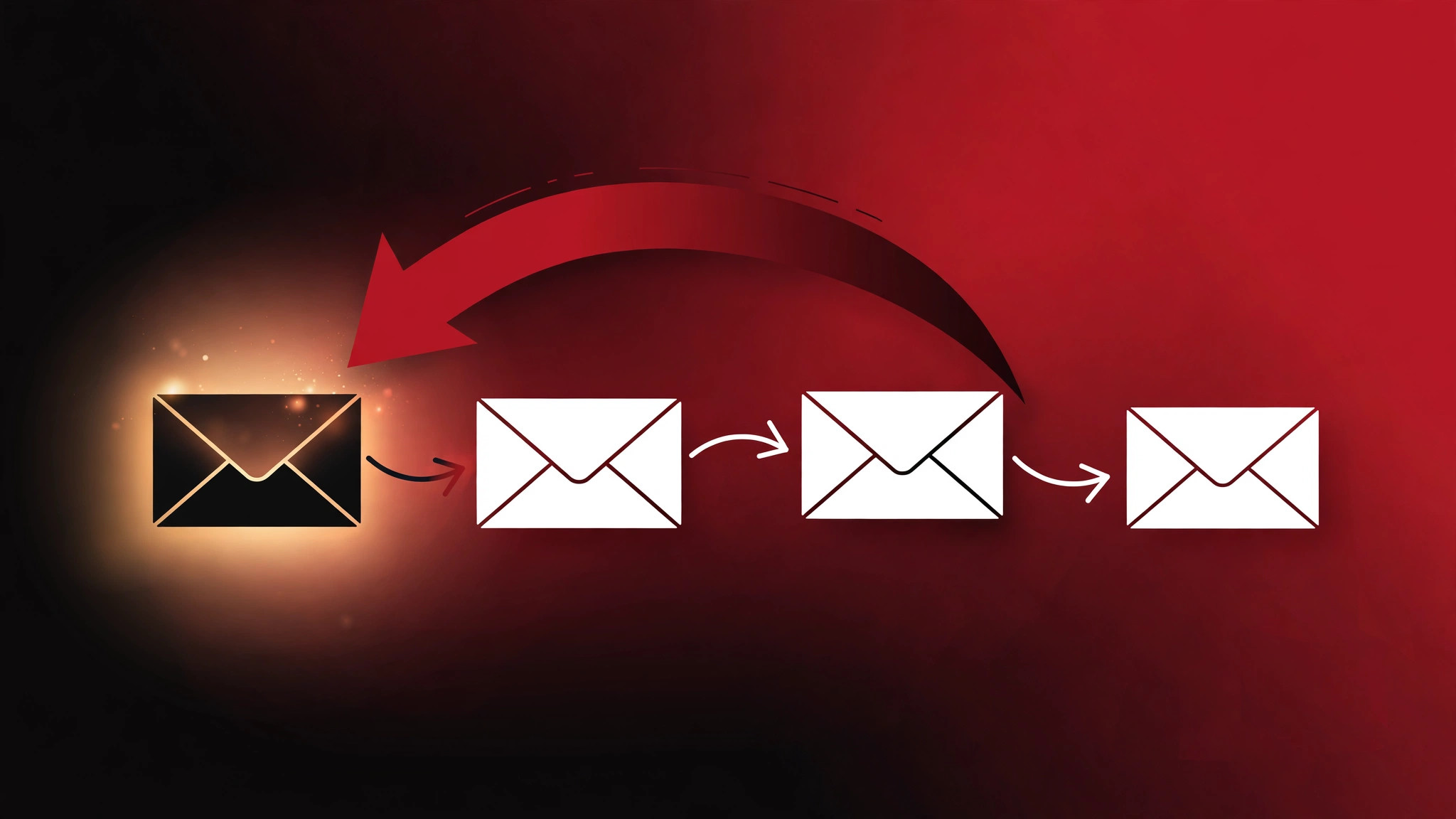
The sequence: email 1 (day 3 — the value-add bump: the relevant insight or resource — the giving); email 2 (day 7 — the new angle: the different reason, the case study — the fresh); email 3 (day 14 — the direct ask: the explicit, the easy — the clear); email 4 (day 21 — the breakup: the graceful, the door-open — the final).
The cadence adapts: the hot lead faster (the days, not weeks — the momentum), the cold slower (the value drip — the patience), the channel varied (the email, the social touch, the call — the multi-threaded). The designed sequence beats the ad-hoc reminding every time — the plan that anticipates the silence outperforms the panic that reacts to it.
15 TEMPLATES — ADAPT THESE
The value-add bump (3 variants): 1. "Hi [Name], saw [their company news] — thought of [the implication for them]. [The 2-line insight]. Worth a chat? [You]" 2. "Hi [Name], sharing [the resource/case study] — [the relevance to their situation in one line]. [The soft question]. [You]" 3. "Hi [Name], [the industry data point] made me think of [their challenge]. [The implication]. Open to 15 minutes? [You]"
The new angle (4 variants): 4. The case study ("[Similar company] solved [their problem] — [the result]. Happy to share how."). 5. The question ("Quick question: [the specific, answerable question about their situation]?"). 6. The insight ("Noticed [the trend] affecting [their sector] — [your take]. Thoughts?"). 7. The introduction offer ("Know [the useful contact]? Happy to connect you regardless."). The direct ask (4 variants): 8. The calendar ("[Two specific times] for 20 minutes — [the agenda]?"). 9. The straightforward ("Should we talk about [the opportunity], or is the timing wrong?"). 10. The referral ("If not you, who owns [the area]? Happy to redirect."). 11. The event ("We'll be at [event] — 10 minutes there easier?").
The breakup (2 variants): 12. "Hi [Name], I'll stop reaching out — [the graceful close]. If [the situation] changes, [the easy re-entry]. [You]" 13. The permission ("Should I close the loop on this?"). The re-engagement (2 variants): 14. The trigger ("Saw [the new trigger event] — [the renewed relevance]. Still relevant?"). 15. The check-in ("It's been [time] — [the what's-changed on your side]. Worth reconnecting?"). Adapt every template: the specific details, your voice, the genuine — the template is the skeleton; the personalisation is the flesh. Our digital marketing outreach runs on these structures — the systematised follow-up that earns replies.
THE BREAKUP EMAIL — THE GRACEFUL CLOSE
The breakup email is the sequence's secret weapon: the honest ("I'll stop reaching out" — the respected), the door-open (the easy re-entry — the welcomed), and the often-replied-to (the paradox — the permission to go triggering the decision to stay).
Write it with genuine grace: the no-guilt (the "no worries if the timing's wrong" — the kind), the value recap (the "here's what we discussed" — the reminded), and the future open (the "if things change" — the invited). The breakup email frequently produces the highest reply rate of the sequence — the honesty earning what the persistence could not. Send it proudly; it is the professional close, not the admission of defeat.
SYSTEMATISE IT — THE FOLLOW-UP MACHINE
Systematise: the sequences templated (the per-scenario — the ready), the CRM automated (the tasks, the reminders — the enforced), the personalisation (the genuine — the per-send), and the measurement (the reply rates per template — the optimised).
The system with the soul: the automation handles the cadence; the human handles the genuine. Never fully automate the personal — the sequence that feels automated is the sequence that fails. Talk to us about the follow-up systems — the sequences, the templates, the discipline — that earn replies. The fortune is in the follow-up — the systematised, the genuine, the persistent.
FOLLOW-UP EMAILS — FAQs
How many follow-ups is too many?
Four to five emails over three weeks is the professional standard — then the breakup. More is the pestering; fewer is the leaving money on the table. The sequence, not the count alone, decides the reception.
Should follow-ups be in the same thread?
Yes — the thread preserves the context and the history. The new thread loses the story; the continued thread compounds it. Thread discipline is follow-up effectiveness.
What is the best follow-up subject line?
The "Re:" continuation usually outperforms the clever new subject — the context recognised. Where the new angle justifies it, the fresh subject ("[The specific value]") can work. Test for your audience; default to the thread.
How do we personalise at scale?
The tiered approach: the fully manual for the high-value, the templated-with-genuine-touches for the volume. The template provides the structure; the two personalised sentences provide the soul. Never send the untouched template.
What if they asked us not to follow up?
Respect it immediately and completely — the request honoured, the contact suppressed, the trust preserved. The follow-up that ignores the "no" is the harassment; the respected boundary sometimes reopens later.


