VISUOSOFTS · WEB DEVELOPMENT
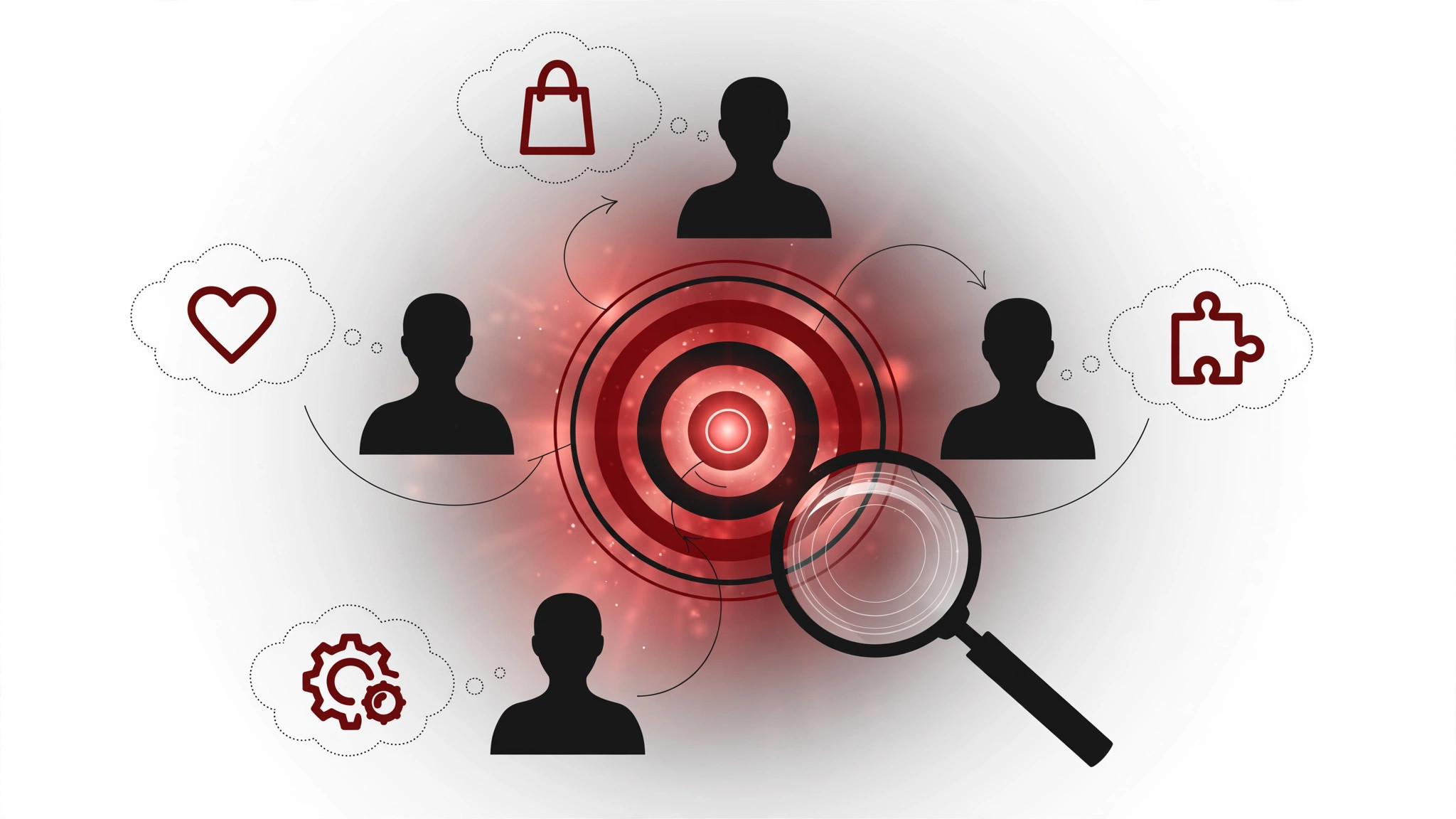
Businesses fail not from lack of effort but from solving the wrong problems — building products nobody asked for, marketing messages nobody wants, services nobody values. Identifying and targeting your business's customer needs is the discipline that aims all effort at what matters. This guide shows how.
Written for UK SMBs: the discovery, the targeting, and the alignment.
WHY NEEDS FIRST — THE FOUNDATION
Every business decision is a bet on customer needs: the product (what they will use), the marketing (what will resonate), the pricing (what they will pay), the service (what will satisfy). Bets placed on assumed needs fail expensively; bets placed on discovered needs compound. The needs-first business aims its limited resources at the real targets; the assumption-first business sprays effort hopefully.
The cost of getting it wrong is the quiet killer: the feature nobody uses (the development wasted), the campaign nobody answers (the budget burned), the positioning nobody believes (the trust never built). Needs discovery is the cheapest insurance in business — the conversations and research that cost little and prevent the expensive mistakes. For the experience design that serves discovered needs, see improving user experience.
DISCOVER THE NEEDS — THE METHODS
Discover through: customer interviews (the deep conversations — the why behind the what, the language in their words), observation (watching customers work — the needs they cannot articulate, the workarounds that reveal pain), data analysis (the behaviour — what they actually do, which often differs from what they say), and front-line intelligence (your sales and service teams — the daily contact with needs, systematically captured).
Discover well: the open questions ("tell me about the hardest part of…"), the jobs-to-be-done lens (what are they trying to achieve? — the outcome, not the feature), the five-whys depth (the surface want excavated to the root need), and the diverse sample (customers, lost prospects, non-customers — the needs vary by perspective). Document the findings as need statements: "[Customer type] needs [outcome] because [reason]" — the format that travels from research into decisions.
THE NEEDS HIERARCHY — WHICH NEEDS MATTER MOST
Not all needs are equal — prioritise by: the pain intensity (the bleeding necks before the nice-to-haves — urgency drives buying), the frequency (the daily frustrations before the annual ones — the value compounds with use), the willingness to pay (the needs customers fund — the economic reality), and the underserved-ness (the needs competitors ignore — the opportunity).
Map needs on the importance-vs-satisfaction grid: high importance, low satisfaction — the gold (the opportunities); high importance, high satisfaction — the defences (the strengths to protect); low importance — the distractions (the features nobody asked for, however clever). The hierarchy focuses the business: the roadmap, the messaging and the investment all flowing to the high-importance, low-satisfaction quadrant. Revisit the hierarchy annually — needs evolve, and yesterday's gold becomes today's table stakes.
TARGET PRECISELY — AIM THE BUSINESS
Targeting means choosing which needs to serve brilliantly: the focus needs (the 2–3 you will own — the positioning), the explicit non-targets (the needs you will not chase — the discipline), and the segment match (which customer types hold these needs most intensely — the targeting). The business that targets precisely beats the business that serves generally — focus is the SMB's superpower.
Express the targeting as the value proposition per segment: for [customer type] with [need], we deliver [outcome] through [approach] — the sentence that aligns product, marketing and sales. Test the targeting with the market (do the targeted respond? — the validation), and refine from the response. Targeting is a hypothesis until the market confirms it — hold it firmly but provisionally.
ALIGN THE BUSINESS — NEEDS THROUGH EVERY FUNCTION
Align every function to the targeted needs: product (the roadmap serving the focus needs — the features that matter), marketing (the messaging in the customers' language about their needs — the resonance), sales (the discovery diagnosing the needs, the proposals addressing them — the relevance), and service (the support resolving the needs' frictions — the satisfaction).
Build the alignment mechanisms: the shared need statements (the common language — every function using the same customer vocabulary), the customer advisory input (the regular reality-check — customers in the room, literally or through research), and the metrics (the need-satisfaction measures — the outcomes tracked, not just the outputs). Our digital marketing work starts from needs discovery — the campaigns aimed at real targets, not assumed ones.
EVOLVE WITH NEEDS — THE MOVING TARGET
Needs evolve: markets mature, technologies shift, expectations rise (yesterday's delight is today's baseline). Evolve through: the continuous discovery rhythm (the always-on interviews — a few monthly, the habit), the trend monitoring (the weak signals — the emerging needs before they are obvious), and the strategic reviews (the annual needs reassessment — the hierarchy refreshed).
Distinguish the durable from the faddish: the fundamental needs (the jobs-to-be-done — stable for years) versus the expressed preferences (the fashionable — shifting). Build on the durable; adapt to the expressed. Talk to us about discovering your customers' real needs — and aiming the whole business at them.
Make needs discovery visible across the business: the need statements on the wall (literally — the shared language), the customer quotes in the all-hands (the voice in the room), the needs review in planning cycles (the strategy anchored). Needs that live in a research report gather dust; needs that live in the culture drive decisions daily. The most customer-centric businesses are not the ones with the most research — they are the ones where the customer's voice is hardest to ignore.
CUSTOMER NEEDS — FAQs
How do we find needs customers can't articulate?
Observe them working (the workarounds reveal the pain), ask about the job-to-be-done (the outcome, not the feature), and dig with the five whys. The unarticulated needs are often the most valuable — competitors miss them too.
Stated vs revealed needs — which to trust?
Both, weighted toward revealed: what customers do (behaviour data) usually trumps what they say (survey claims). Use stated needs for the language and revealed needs for the priorities — together they give the full picture.
How many needs should we target?
Two to three focus needs — the ones you will own. More diffuses the business; fewer risks fragility. The focus needs get the roadmap, the messaging and the investment; the rest get competent service, not obsession.
What if different segments have different needs?
Then segment the targeting: the core needs per segment, the value proposition adapted, the business aligned per segment where it matters. Do not average conflicting needs into a nobody-pleasing compromise.
How often should we revisit needs?
Continuously light (the monthly interview habit), annually deep (the hierarchy refresh). Needs evolve gradually then suddenly — the rhythm catches the gradual, the depth catches the sudden.


