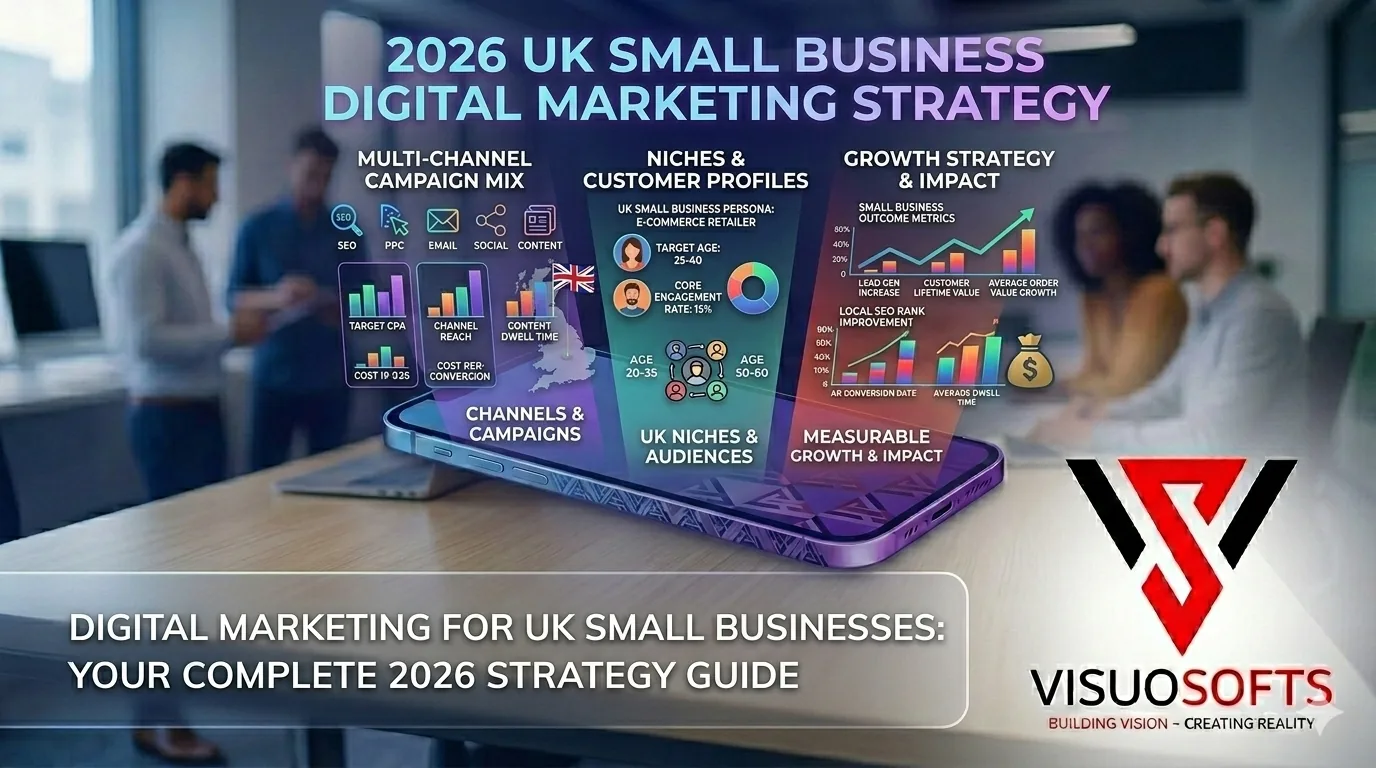
Digital marketing for UK small businesses has a different starting constraint than enterprise marketing: not enough budget to do everything at once, which means the first real decision is what to leave out, not what to add.
Pick One Channel Before You Pick a Second
The most common small-business mistake is spreading a modest budget across four channels instead of concentrating it on one long enough to see whether it actually works. £300/month split four ways barely moves any of them; £300/month on one channel, run properly for three months, gives you a real answer.
Which one depends on how your customers actually buy. If people search for what you sell when they need it (a plumber, a solicitor, a specific product), start with local SEO and Google Business Profile — it's the channel with the clearest intent-to-purchase link. If your product is more discovery-led — something people didn't know they wanted until they saw it — social media and paid social usually outperform search early on.
DIY, a Freelancer, or an Agency at Small-Business Scale
Under roughly £500/month of marketing budget, doing it yourself or handing one specific task to a freelancer (someone to just manage your Google Business Profile, or just write and schedule social posts) is usually more sensible than an agency retainer — the management overhead of an agency relationship isn't worth it at that spend level.
Once you're consistently spending £750+/month and need more than one channel coordinated, a small agency or a marketing-focused freelance collective starts to make sense. The test isn't your revenue — it's whether you have the time to run this yourself. If you don't, the cost of your own time is part of the real cost of "doing it yourself."
What to Track (and What to Ignore)
Follower counts and likes are the easiest numbers to see and the least connected to revenue. Track enquiries, quote requests, or sales that you can trace back to a channel — even roughly, by asking "how did you hear about us" — before you track anything else. A small business with 40 followers and 3 real enquiries a month from social is doing better than one with 4,000 followers and none.
The Realistic Timeline
Expect the first month to be setup and baseline data, not results. Expect month two to three to show whether the channel is working at all. Give a channel a genuine quarter before deciding to abandon it — most small-business marketing failures are actually impatience failures, switching channels every few weeks before any of them had time to compound.
Choosing where to spend when you cannot do everything
A small business cannot run every channel well, and trying is the most reliable way to do all of them badly. The decision is easier than it looks if you answer three questions honestly.
- Are people already searching for what you sell? If yes, search — organic and paid — should take most of the budget, because you are capturing demand rather than creating it. If no, you need a channel that generates awareness first, and search will not do that.
- What is a customer worth over their lifetime? This sets your ceiling for acquisition cost and decides whether paid channels are viable at all. Businesses that skip this step discover their answer by running out of money.
- What can you actually sustain? A channel worked for two months and abandoned returns nothing. Pick what you can maintain in your worst month, not your best.
What each channel is genuinely for
| Channel | Best at | Realistic time to results |
|---|---|---|
| Local SEO | Capturing nearby intent; the highest-return work for most local businesses | Weeks for profile work, months for organic |
| Organic search | Compounding traffic that does not stop when spend stops | Six months or more before commercial impact |
| Paid search | Immediate visibility against existing demand | Days, and it stops the day you stop paying |
| Paid social | Creating demand where nobody is searching yet | Weeks, with heavy dependence on creative |
| The cheapest revenue you have; retention and repeat purchase | Immediate, and consistently under-used | |
| Organic social | Trust and proof; poor at direct acquisition | Slow, and it is a commitment not a campaign |
The one most often skipped is email, which is odd given it costs almost nothing and speaks to people who already bought from you. If you are choosing between starting a TikTok account and setting up a post-purchase email sequence, do the sequence.
The measurement setup that pays for itself
Most small businesses cannot say which half of their marketing works, and the fix is a couple of hours rather than a project.
- Analytics with real goals configured — enquiries, calls, purchases. Sessions are not a goal.
- Call tracking if the phone is how people reach you. Otherwise your best channel is invisible.
- Ask every enquiry how they found you and write it down. Imperfect, and often more accurate than the attribution model.
- One number per channel — cost per enquiry. Comparable across everything, and it makes the budget decision obvious.
- A monthly half-hour to look at it. The reviewing matters more than the tooling.
Sequencing the first year
Order matters more than ambition, because early steps make later ones cheaper.
Months one to three: fix measurement, claim and complete your Google Business Profile, get the website loading quickly on a phone, and make the contact path obvious. This is unglamorous and it raises the return on everything that follows.
Months four to six: start the channel your answers above pointed at. One channel, done properly, with a budget you can sustain for six months.
Months seven to nine: add email and start collecting reviews systematically. Both compound and neither needs much budget.
Months ten to twelve: read what actually happened, cut what did not work, and put the money into what did. This step is where most plans fail, because nobody scheduled it.
Mistakes that cost the most
Spreading a small budget across five channels. None gets enough to work, and you learn nothing about any of them.
Stopping too early. Organic search abandoned at month four has cost you the money and none of the benefit.
Buying traffic to a page that does not convert. Fix the destination before paying for arrivals; it makes every future pound go further.
Rebuilding the website first. Tempting, expensive, and rarely the constraint. Find out what is actually stopping enquiries before commissioning a redesign.
Frequently Asked Questions
What's a realistic marketing budget for a small UK business?
There's no universal number, but £300-£750/month is a common starting range for a single-location small business, scaling with how competitive your local market is. What matters more than the total is not splitting it across too many channels at once.
Should a small business bother with SEO, or just run ads?
If your product or service is something people actively search for, SEO is worth starting early precisely because it's slow — the businesses ranking well in three years are the ones who started now. Ads are the right tool for immediate volume while that builds.
Is it worth hiring an agency before I have a marketing budget of £1,000+/month?
Usually not. Below that, a specific freelancer for your highest-priority channel, or doing it yourself with a clear plan, tends to give better value than an agency retainer, where a meaningful share of the fee goes to account management rather than execution.
If you're not sure which single channel to start with, that's exactly the conversation worth having before spending anything. Get in touch and we'll give you a straight answer, even if it's "you don't need us yet."
Which marketing channel should a small business start with?
Answer three questions first. Are people already searching for what you sell? If so, search should take most of the budget because you are capturing demand rather than creating it. What is a customer worth over their lifetime? That sets your ceiling for acquisition cost and decides whether paid channels are viable at all. And what can you actually sustain in your worst month, not your best? A channel worked for two months and abandoned returns nothing, so pick one you can maintain and do it properly.
What is the most under-used channel for small businesses?
Email, consistently. It costs almost nothing, it speaks to people who have already bought from you, and results arrive immediately rather than in six months. If you are choosing between starting a new social account and setting up a post-purchase email sequence, do the sequence. Collecting reviews systematically is the other high-return, low-budget activity most businesses skip, and both compound over time in a way paid channels do not.
What is the most expensive mistake in small business marketing?
Spreading a small budget across five channels, because none gets enough to work and you learn nothing about any of them. Close behind: stopping organic search at month four, which costs you the money and none of the benefit; buying traffic to a page that does not convert, when fixing the destination first makes every future pound go further; and rebuilding the website before establishing what is actually stopping enquiries, which is tempting, expensive and rarely the real constraint.